
Subscribe
Subscribe
- Motoring
- Style
- Home & Design
- Travel
- Food & Drink
- Specials
- News & Tech
- Videos
Donning pieces that scream for attention, courtesy of their size, is passé. Today, high-net-worth individuals (read youngsters coming from old money) who don't copy celebrity trends have a tribe of their own. For generations, grandeur has set the tone in the form of opulent bangles, ornate necklaces, and heavy jhumkas, but now the Gen Zs and millennials are reshaping adornment trends in India. Be it for office wear, a casual brunch, or an evening wedding, one can see more gold chains, diamond studs, geometric rings, and stackable bracelets and bangles.

“Today, luxury has been stamped onto hotel rooms, coffee cups, and phone cases. Everything is called luxury, but nothing truly is,” says Milind Choksi, CEO and founder of Moksh, a Mumbai-based luxury jewellery brand. Young brides, working women, and the digitally aware are the consumers who seem to have taken to minimalist designs that marry traditional designs with minimalist sensibility. “Minimalist accessorising is about clarity — clean lines, effortless layering, and pieces that can transition across moods and moments,” says Biren Vaidya, founder of The House of Rose.
“Luxury is no longer defined by loud logos or excess. It is defined by time, meaning, intention, and craftsmanship,” says Choksi. While traditional shades of reds and maroons rule the roost when it comes to bridal wear, the ‘heaviness’ of the garment has been toned down. ‘The too hard to carry’, heavily embroidered lehenga has paved the way for simpler designs, and brides seem to be opting for jewellery to go with these designs.
Weighty pieces have paved the way for ones that the brides can wear beyond the ceremony. Fashion jewellery and semi-precious jewellery like Anita Dongre's Pink City, Outhouse, and Studio Metallurgy are balancing modern minimalism with traditional craftsmanship. Luxury brands like Studio Renn and Zoya have also caught up. “We’ve absolutely seen a rise in demand for such styles, especially post-pandemic, where intentionality and meaningful purchases have become the norm. Today, we see more people gravitating toward elegant solitaire rings, delicate diamond line bracelets, and petite pendant necklaces. They seek pieces that are luxurious, yet easy to wear — jewellery that complements their individuality without overpowering it,” Vaidya says.
“Our clients are opting for jewellery they can wear to the gym or to the office with confidence and contentment at the same time,” says Anuj Shah, founder and creative director of House of Umrao.
“Today’s Indian luxury consumer is discerning, educated, and globally aware. They are proud of their heritage, but no longer defined by ostentation,” Choksi says. “We see interest from young, globally exposed professionals, second-generation entrepreneurs, and women from legacy families who value heritage with a modern lens. Minimalist luxury appeals both to the discerning "old money" ethos — where less is more — and to the emerging class of self-made individuals who prefer pieces that align with their curated, purposeful lifestyles. It transcends age and background — it’s a mindset,” Vaidya adds.
"Consumers who buy luxury minimalist jewellery are a mix of high-net-worth individuals and youngsters belonging to old money. They have their mothers who wear big stuff, sometimes of low quality. They seek out smaller stuff with quality craftsmanship. I have clients coming with their children to break down old jewellery and get new jewellery made as per today’s trends,” Shah says.
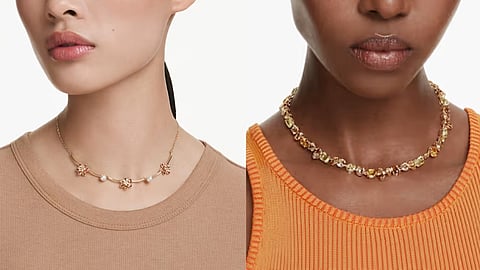
Solitaire rings, pearl drop earrings, delicate diamond line bracelets, petite pendant necklaces, birthstone rings, zodiac charms, and engravable bracelets are some pieces people are gravitating towards, according to Anuj Shah, founder and creative director of House of Umrao.
Vaidya feels that the luxury minimalist jewellery trend is here to stay. “Luxe minimalism aligns with a broader cultural shift — towards conscious consumption, investment pieces, and individual expression. As the jewellery industry evolves, clients are leaning into quality, versatility, and meaning. This isn’t a fleeting trend — it’s a new language of luxury,” he says. “People are getting wiser and sharper and are more aware of what’s going on. It is time to become more informed,” Shah adds.