
Subscribe
Subscribe
- Motoring
- Style
- Home & Design
- Travel
- Food & Drink
- Specials
- News & Tech
- Videos
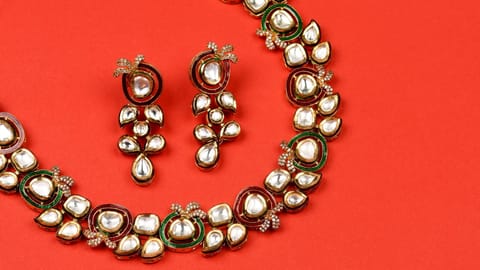
Kundan ornaments, a common heirloom in jewellery kits, have a particular meaning in our nation. Under soft, diffused light, kundan jewellery glows with a quiet depth, as if holding stories within every stone. Its uncut gems and warm gold settings carry a sense of old-world charm that feels majestic, effortlessly bridging heirloom tradition with contemporary elegance.
This heirloom jewellery is a highly valued craft that has been tenderly passed down through generations, with roots in the regal era of the past. Kundan, even today, is deeply tied to Indian weddings, heirlooms, and generational storytelling.

Kundan is a type of gold jewellery that typically has a wax core. The word "kundan" itself refers to extremely refined pure gold, and 24k pure gold, which is typically used in this kind of jewellery. With a long history spanning more than 2,500 years, kundan jewellery is regarded as one of the oldest types of jewellery in India. Only the jadayi portion, which is finally referred to as kundan, is completed in 24 karats since it is slightly softer than other materials. Jadau jewellery is another name for the craft of creating kundan.
One of the oldest jewellery crafts in India, kundan jewellery has roots in the Rajput and Mughal eras. Many centuries ago, this style was introduced to the nation and flourished under the Mughals' patronage. The Indian royal family then effectively adopted it. Today, you can find traces of art and craftsmanship from the Mughal and Rajput eras in this kind of jewellery.
The first step in creating kundan jewellery is creating a ghat in 22 carat gold, sometimes referred to as gadhayi, which are one-of-a-kind pieces with golden stripes. Thin golden strips that are chopped, coiled, and moulded are used to set the picture of a typical mould-like framework in accordance with the design. This is the most crucial stage in laying the piece's basis. Khudayi, the second phase, is carving the necessary patterns and decorations on the exterior. In this method, the framework is carved after being filled with either gold or lac, a kind of wax. In essence, this phase entails etching the intended pattern or design onto the jewellery piece's surface.
Meenakari, which involves filling the carved patterns on the gold surface with different natural colours, comes next. Lastly, jadayi is used to put valuable, rare stones like diamonds, polkis, emeralds, sapphires, and rubies into the jewellery to enhance its beauty. A gold foil is placed between the stones and their mount to set the gem. After that, they are positioned on the jewellery piece's surface and given enough hold by the gold foiling. Kundan works need a great deal of specialised labour and are very complex. Because each piece is hand-finished, talented artisans have put in countless hours of labour. A tiny piece of kundan jewellery can be made in two to four months, depending on the level of skill and complexity of the design. There is no predetermined criteria for using specific motifs in kundan jewellery. However, the most common sources of inspiration include nature and architecture.
Since genuine pieces are rarely left plain, authentic kundan jewellery can frequently be recognised by its meenakari (enamel decoration) on the back. A BIS stamp or HUID number are examples of hallmarks that further attest to the gold's purity. In contrast to lightweight, plastic replicas that often feel warm, real kundan usually feels heavier and the stones stay cool to the touch because 24-karat gold foil is used to attach the gemstones. Instead of having a dazzling or brassy sheen, authentic kundan has a delicate, slightly matte gold finish. A Certificate of Authenticity from a reputable jeweller attesting to the fact that it was made by hand utilising the age-old jadau process should also be included.
Kundan jewellery has historically featured elaborate and exquisite designs. It was once only made for royal families. This jewellery design has changed over time, and silver metal has also been used to replicate it. The average person could now purchase this type of jewellery after commercialisation took hold. In contrast to the earlier era, the quality of workmanship has decreased due to its greater accessibility. Only carefully chosen craftspeople may now be relied upon to produce genuine, high-quality work. Ideally, a piece that was formerly completed in three to four months can now be produced in just one month.
For weddings, kundan's delicate and beautiful appearance is often sought for. Traditional Indian jewellery has always been substantial and composed of huge gold pieces. Indian brides are increasingly wearing lighter kundan jewellery as the times change. There's a reason why royals favoured this type of jewellery: Every lady wants to seem like a queen on her wedding day. Compared to large diamond sets, kundan jewellery frequently goes better with traditional bridal attire.
Kundan continues to evolve with changing times and styles, yet it never drifts away from its roots, each piece still carries the quiet weight of craftsmanship, tradition, and a legacy shaped by countless skilled hands across generations.