
Subscribe
Subscribe
- Motoring
- Style
- Home & Design
- Travel
- Food & Drink
- Specials
- News & Tech
- Videos
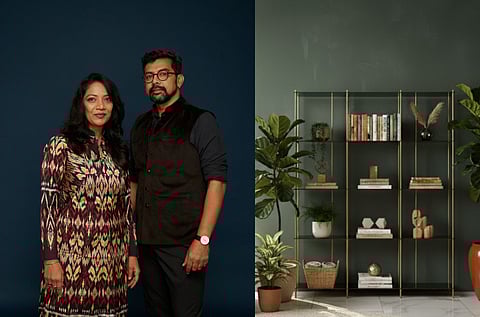
For nearly two decades, Jaipur-based AKFD Studios, co-founded by Ayush and Geetanjali Kasliwal, have built a practice that brings India’s living craft traditions into a contemporary, global space without nostalgia or ornamentation. Here, they discuss the philosophy that guides their studio, and the growing global appetite for Indian handmade design.

Ayush Kasliwal and Geetanjali Kasliwal (AK and GK): When we founded AKFD, the ambition was to create a studio where design could honour India’s living craft traditions while pushing them into a contemporary, global language. The name, deliberately distilled into initials, allowed us to keep the focus on the work rather than on authorship. The luxury we wanted to speak of wasn’t indulgence; it was of precision, material honesty, and cultural continuity. True luxury is when something made by many hands becomes a part of someone’s life for a long time.
GK: Ayush is the creative engine. [He is] instinctive with materials, proportion, and craft innovation. He thinks like a maker, sketches like a sculptor, and pushes boundaries that artisans did not know were possible. My role is to align the creative intention with purpose—who it is for, what value it brings, how it fits into a client’s larger story. This combination of creative depth and strategic direction allows us to move from concept to execution with intention.
AK and GK: Luxury today is the presence of intention. It is the willingness to slow down, to make with care, and to choose materials and processes that stand the test of time. Luxury is the space between necessity and beauty. It is emotional resonance, not abundance.
AK and GK: For us, sustainability means being able to do something today, tomorrow and forever without compromising any other system or environment. We are strongly against wastage; upcycling and recycling has been a way of life long before these ideas became formal frameworks. The most sustainable things are the ones that already exist.
AK: ‘Use more of less’ is at the core of how we design. Rather than adding layers, we refine a form until only the essential remains. The Shiva Jug, for instance, use copper judiciously. The Tara Dhokra installation refines Dhokra craft to its essence—the line—allowing magical traceries in which each element is unique.
AK and GK: Terracotta is exciting—millions of skilled potters across the country make it an under-utilised material with tremendous scope in both product and architecture. Cast metal—brass, aluminium, copper, iron—has infinite possibilities. Thread, manipulated into cloth or braid, holds enormous potential and remains a simple but powerful material.
AK and GK: Luxury hospitality in India is shifting toward places that feel culturally anchored. Guests now look for hotels that reflect the region's character through materials, craft and atmosphere rather than relying on a universal aesthetic. They want environments that are distinctive, human, and memorable. Narendra Bhawan and the Thar Apartments at Suryagarh allowed us to integrate craft into the structure of the space. Our access to craft skills, coupled with design rigour, allow us to be craft-intensive anywhere in the world.
AK and GK: The Anantaya Konark Portable Lamp—Alabaster—is especially meaningful to us. The lamp draws inspiration from the Sun Temple of Konark. It is crafted in alabaster and topped with a brass shikhara. What makes it truly special is that it integrates technology with craft. The brass shikhara is touch-sensitive, an element not commonly found in metals and natural stone. It is dimmable and rechargeable.
AK and GK: Our creativity comes from the people who shape the studio every day. Nothing here is templated. Every project starts with openness and willingness to explore. Designers, artisans, and technicians work closely together, exchanging thoughts and testing materials. Commercial needs are met with clarity, but never at the cost of integrity.
AK and GK: A meaningful legacy for us lies in the possibility that craft can live forever. Our designs are created to endure. We hope to leave behind a legacy where our work continues to feel human, grounded and peaceful.