
Subscribe
Subscribe
- Motoring
- Style
- Home & Design
- Travel
- Food & Drink
- Specials
- News & Tech
- Videos
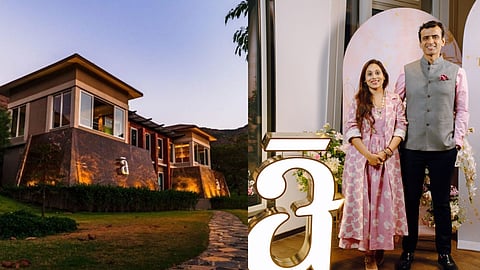
Walking pathways flanked by lush greenery, uninterrupted views of the Sahyadri mountain range, and the blue waters of Mulshi Lake set the tone at the Atmantan Wellness Centre — an institution that blends functional medicine with Ayurveda. Therapies span multiple disciplines, from traditional Chinese medicine-led massages to sound healing, Reiki, and yoga, with a clear emphasis on breathwork. The entire setting fosters an environment for healing, and a major pillar of this approach focusses on intake. Yes, meals are tailored to individual needs, but it isn’t simply looked at as healthy eating. Over a decade, it has been shaped into an outcome-driven system, used as a therapeutic tool to drive targeted results.
For founders Sharmilee and Nikhil Kapur, this is the haven they’ve built, brick by brick, over the past decade. Now, with a recent partnership with Indian Hotels Company Limited (IHCL) signalling its next phase of growth, Atmantan is looking to expand its footprint, while keeping its core philosophy of integrated wellness intact. But what does it take to create a space like this — and more importantly, keep it relevant as the idea of wellness rapidly evolves? In a candid conversation with the duo, we find out.

Nikhil Kapur (NK): Our core audience, for whom we built Atmantan, has always been between 35 and 65. That’s a segment we understand very well, and what we offer is highly relevant to them. We also have guests aged 65–80, who make up about 17–18 per cent of our audience. So overall, we’re centred around a 35–75 demographic. That said, people aged 16–30 also need wellness, and for our younger audiences, we may need to rethink certain aspects. For instance, a 16-year-old might want technology integrated into their wellness journey, but we currently don’t allow mobile use here. We do get some even younger guests, low single digits, but also founders in their 20s and early 30s who want to fix their health before their next big venture.
Sharmilee Kapur (SK): Over the last year, we’ve invested heavily in fitness equipment, including neuro-reactive fitness, which resonates with younger guests. Gen Z is very focussed on fitness and mental health, and they are open to things like energy healing — especially when they see consistent results. The difference here is continuity. In a city, you may try something once and lose the rhythm. Here, you experience it consistently. Having said that, it would still have to be a more mature Gen Z — someone who understands the need for digital detox, since many of them struggle with sleep and stress.
NK: Yes, there’s been a significant attitudinal shift. When people arrive, they often say, “Fix me.” But when they leave, they say, “Now I know what to do.” This happens because we focus on educating, too. It’s not just about results in a controlled environment; it’s about helping them keep those results once they leave. We aim to help them rewire certain habits, make informed decisions, and adopt a sustainable, realistic approach to health.
SK: Our guests are incredibly aware and evolved — they’ve always been that way. Many deal with co-morbidities and have tried addressing them at home, but lack consistency. Here, their bodies learn to heal naturally. It’s not about the quick fixes, it’s about lasting change. They leave knowing what they need better and how to continue those practices at home.
NK: First, the land. It’s incredibly powerful. When we began, my father brought in his spiritual guru, who said the land was already blessed due to centuries of worship. It’s a crystal land with a unique energy. Second, integrated wellness. Health is complex, and no single science can address everything. While disciplines like yoga or Ayurveda are powerful, they don’t always work in isolation for every individual. Our approach brings multiple specialists together to create one cohesive programme. Third, the team. That’s actually our biggest compliment — guests consistently say they love the team. They’re attentive, supportive, and deeply involved.
SK: Nature has the power to heal, if you let it. Here, nature supports that process.
NK: I do an annual retreat here for 15–20 days, where I fully immerse myself in therapies. Outside of that, we’re here two or three days a week, but that’s for work, so it’s different.
NK: For me, wellness is about making the right decisions for my health, the environment, and the community. That’s also Atmantan’s philosophy: To coexist with nature, the land, plants, and animals, without disturbing them.
SK: Wellness is about taking what you know and integrating it into your life. The more I bring Atmantan’s learnings into my daily life, the clearer it becomes. Wellness should also be personalised — it depends on what you need at a given stage of life. For example, if someone is going through grief, telling them to give up tea or coffee isn’t wellness. It has to make sense at that moment.
SK: One that stood out was someone saying, “Now that I’ve come here, everything will happen automatically.” Yes, it was definitely flattering, but it is also a misunderstanding — we guide you, but you still have to do the work. We can support recovery, for example, helping rebuild immunity after treatments like chemotherapy. But also, we’re not equipped for critical care. Those are difficult situations where we have to say no.
NK: Lots more! We plan on adding four more properties — Hyderabad is already signed, and a second property near Mumbai (Raigad) is in progress. We’re also exploring opportunities in Uttarakhand and Kerala. Our goal is to have five properties in India by 2029–30, totalling around 500 rooms in integrated wellness. Beyond that, we want to expand our ecosystem — possibly into wellness products, supplements, subscription-based meal services, and urban formats. The idea is simple: If someone is looking for a trusted wellbeing partner, Atmantan should be that name.