
Subscribe
Subscribe
- Motoring
- Style
- Home & Design
- Travel
- Food & Drink
- Specials
- News & Tech
- Videos
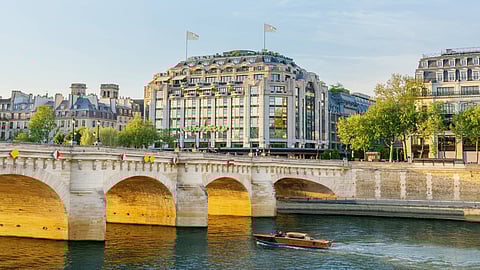
Several years ago, when LVMH announced it would open its first urban Cheval Blanc Maison in Paris, the assumption was that it would reflect the group’s well-known aesthetic of grandeur: gilded surfaces, logo motifs, and the unmistakable visual vocabulary of luxury branding. Instead, the Maison emerged as a quiet manifesto against spectacle.

The Peter Marino-designed property, with its 72 rooms, including 46 suites, avoids traditional hotel opulence. There are no monogrammed carpets or gold-embossed wallpapers. Its palette is muted: straw marquetry walls, parchment-lined closets, bronze fixtures, and tactile materials that privilege touch over immediate visual recognition. Rooms feel more like private apartments than hotel suites.
“Luxury today is moving away from being a display of status to becoming a reflection of inner values,” Bain & Company noted in its luxury report, contextualising the shift among ultra-high-net-worth consumers. For LVMH, a group whose portfolio has long celebrated visible brand codes, Cheval Blanc Paris marks a pivot towards the new language of power: restraint.
Cheval Blanc Paris’ design integrates artworks rather than using them as branded statements. The Maison’s three-Michelin-starred restaurant, Plénitude, helmed by Chef Arnaud Donckele, exemplifies this ethos. Instead of experimental plating theatrics, the focus is on sauces – layered, technical, and deeply rooted in French culinary tradition. The dining room seats just 26 guests, prioritising intimacy over grandeur.
The Dior Spa Cheval Blanc houses one of Europe’s longest indoor hotel pool at nearly 30 metres, flanked by treatments that combine Dior skincare science with quiet precision. There are no gold-plated massage beds or curated selfie walls. Treatments are designed to recalibrate both body and mind, delivered with calm mastery.
This approach is consistent with other recent movements within LVMH. Loro Piana, acquired in 2013, continues to build its reputation on cashmere and wool garments so refined they require no logos – their value lies in touch, provenance, and craftsmanship. Celine, particularly under Phoebe Philo, became synonymous with minimalist tailoring and clean silhouettes, appealing to consumers who prioritised material and cut over obvious branding. Even Rimowa, known for its aluminium grooved suitcases, signals brand recognition through design silhouette and functional engineering rather than visible logos.
According to the 2025 Intentional Traveler Report, Asia Pacific’s affluent travellers are travelling less frequently but spending more when they do. “In 2025, luxury travel is no longer about spontaneity; it’s about intention,” the report states. “The modern luxury itinerary is meticulously planned, deeply personal, and designed to deliver meaningful returns — emotional, sensory, and transformational.”
For hotels like Cheval Blanc Paris, that shift towards intention-based travel aligns seamlessly with its design philosophy. This is not a property engineered for selfies or social media virality. It is built for guests who want to arrive and feel instantly anchored, whether in the softness of their cashmere throws, the silence of their private balconies overlooking the Seine, or the intimate dining rituals that require no performative plating to prove their worth.
This trend towards quiet luxury has also begun influencing design and supplier decisions across the hotel industry. At the International Luxury Travel Market Cannes last December, multiple hotel groups spoke of an emerging priority: investing in sensory-focused upgrades that prioritise calm acoustics, layered natural textures, and lighting designed to match circadian rhythms. The future, it seems, will belong to spaces that foster a sense of groundedness.
For Indian luxury travellers, many of whom are increasingly global in their tastes, this recalibration feels timely. While spectacle still has its place – Dubai’s gold-draped lobbies continue to draw social media awe – a growing cohort now seeks personal experiences, rooted in knowledge and expertise rather than decorative excess. In this context, Cheval Blanc’s deliberate quiet feels less like an aesthetic choice and more like a cultural reset.
Yet none of this quiet luxury comes cheap. A night at Cheval Blanc Paris can exceed EUR 3,000 (INR 3,01,500 approximately), and suite rates can rise exponentially. The investment lies in sourcing rare materials, employing expert craftspeople, and creating a guest experience that feels custom-made. As Bain & Company’s outlook emphasised, “Across generations, drivers linked with self‑reward, status, personal identity… continue to drive engagement.” But increasingly, those rewards are sought in quieter forms.
In an industry that has long equated visibility with value, the big-picture trend proposes another truth: the deepest experiences are the ones felt, not flaunted. It is a reminder that true luxury isn’t what you see when you walk in, but what remains with you long after you leave – an understanding that the quietest spaces often carry the greatest power.