
Subscribe
Subscribe
- Motoring
- Style
- Home & Design
- Travel
- Food & Drink
- Specials
- News & Tech
- Videos
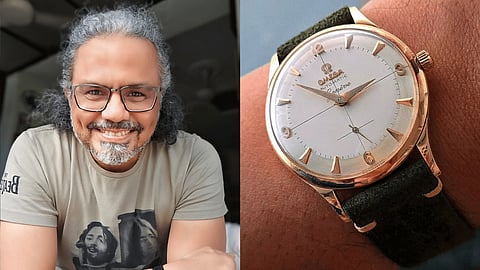
Dr Samir Shah, a Mumbai-based dentist whose professional career spans more than three decades, found his true passion beyond the clinic in the intricate world of mechanical horology. His journey began with a Seiko DX gifted by his grandfather, a seemingly simple watch that introduced him to the inner workings of mechanical timepieces. “I believe that we are all products of our environment and somewhere deep inside, the love for timepieces took root,” he reflects during an exclusive interview with Robb Report India.
Dr Samir Shah: I would admit that it was a watershed moment for me, although I may not have realised it at the time. He was not a collector in the true sense, but he had a few different watches that he would rotate every day. Quite the stylish man he was. This was a time when cheap digital watches were all the rage, and I was a bit flummoxed by this piece that worked in a way I was not familiar with. That was my earliest engagement with a timepiece.
I have always been a collector, whether it was stamps, Tintin, Asterix and other comic books, or later during college, music albums. So yes, this was a significant trigger that manifested later, once my career was stable, and I had some money to pursue this hobby. Even though the focus of my collection is Omega, I did not start with them. That came later, when knowledge and preference formed a deep connection with the brand. I still have many timepieces, modern and vintage, from other brands, but yes, I am recognised as an Omega collector first.
Dr Samir Shah: I saw a dramatic shift during COVID, not only in India but globally, where people started buying watches in large numbers, probably due to the lockdown and the all-pervasive internet. With such a sharp change in habits and access to information, the watch market, whether luxury or vintage, has become very buoyant, giving rise to hype pieces and creating huge demand with rising prices. My relationship with watches has matured in the sense that I do not buy as frequently as I used to. It takes special pieces in good condition to catch my interest.

Dr Samir Shah: I always try to wear all my watches to justify their place in the collection. Usually, I pick out five or six watches every week and wear them for that week, then switch to another lot. Sometimes I just wear one for a few days straight.
Dr Samir Shah: Those were the days. Sadly, the romance is long gone, of trudging through the alleys, checking out watches, having chai, and the camaraderie with the sellers. That time is gone. The most vivid acquisitions for me are two. My first Swiss watch from an obscure brand called Rofina, which was in terrific shape, and I still have it. The other was my first vintage Omega automatic.
Dr Samir Shah: I have never thought about that, as I have always collected what has appealed to me. My sensibilities may not appeal to the next generation, and I would not want to burden them with an heirloom they would not connect with. I have seen enough so-called heirlooms make it to the market for sale after a family member’s demise. My watches will be available to the next generation to do as they please.
Dr Samir Shah: For me, the draw of vintages is that all are technically limited editions. They will never be made again. The thrill of learning and acquisition is also an extremely rewarding part of the journey. I see a lot of collecting happening for hype pieces and bragging rights. Sadly, I have seen many people come in hot, collecting all they can, and then feel a sense of emptiness because the entire process of relaxed collecting is bypassed, and there is no further thrill left. The need for validation drives this behaviour, and social media amplifies it. But to each of his own.