
Subscribe
Subscribe
- Motoring
- Style
- Home & Design
- Travel
- Food & Drink
- Specials
- News & Tech
- Videos
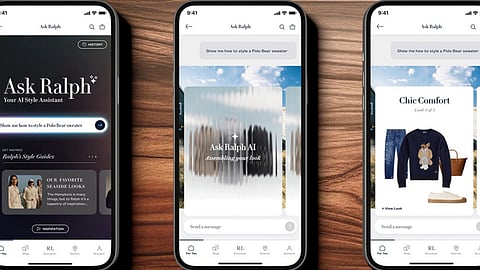
Ralph Lauren last week introduced Ask Ralph, a new AI-powered conversational shopping experience that invites consumers to engage with, and be inspired by, Ralph Lauren’s take on style. Blending advanced AI technology with Ralph Lauren’s brand ethos, Ask Ralph claims to provide styling inspiration by serving up multiple, shoppable visual laydowns of complete outfits, personalised to a user’s prompts, from across available inventory within the Men’s and Women’s Polo Ralph Lauren brand. After the app was rolled out in the US, The Cut posted a first hand user experience. The Cut's blogger tried asking “Ask Ralph” to put together me outfits for a few different occasions, and it responded with a bunch of looks which bordered on uninspiring — along with links to buy them on the Ralph Lauren website — that any casual shopper could have put together on their own.
Not surprising considering an app is not likely to replace a human stylist or a personal shopper. Being a luxury shopper myself, I've always preferred taking advice and suggestions from my trusted Sales Associates over any app. They know everything about my taste, budget, preferences, shopping history to the flavour of coffee I like when I walk into the store. Can an AI generated tool rival that level of customisation, understanding and relationship which was forged after years of shopping? I highly doubt that.
Designer Nachiket Barve observes that what he does as a brand maven has to do with an innate sense of intuition. "It's also about knowing not only what that person looks like or what they think they want but it's also being able to suggest or customise something beyond what they know or what they want. It's that level of contextualising - from what they've got in the past to what they like or they do not like - whether it's from your brand or another brand," says Barve.
There are so many parameters which are intangible and hard to configure into action by axis in terms of why somebody likes something or why they would like something. "Also, as a stylist/designer/personal shopper, your job is to nudge somebody out of their comfort zone into elevating this time. Maybe I have a history of buying black shirts and AI is likely to show me another five black shirts. So it's also about nudging someone into over and beyond something else. I don't think AI can ever replace human touch. In terms of shopping or algorithm based preferences - it's showing you most of what it feels you would like to see. But it is also kind of closing other more exciting options for you because it is working on a predetermined format rather than looking at the bigger picture. Can it be used constructively for people to experiment with style perhaps yes but it can't replace a human touch," he adds.

Designer Anikate Satam of label Pinkporcupines observes that it's not about AI replacing man but how humans can use AI to replace impossible with possibilities. "It will just help us to be more explorative, expressive, diligent and creative. An AI generated-shoot can never replace the grace and chaos of real photoshoot. It will surely have its negative impact on the photography, styling and modelling industry as it would be cheaper, quicker and more sustainable to produce shoots over human intervention. But it can never replace the human connect and experience," he says.
Aravind Narayanan, CMO, Fetus points out that luxury has always been about slowness. Detail. The unseen hands behind the seen world. AI, on the other hand, is built for speed and replication. That doesn’t mean it doesn’t belong in luxury—it just means it has to be taught how to feel. "At Fetus, we use technology to deepen myth, not dilute it. Our garments don’t come with styling suggestions—they come with lore, with relics, with reasons to exist. We’re not interested in AI that tells you what to wear. We’re interested in AI that asks why you’re even dressing at all. Ralph’s Ask Ralph is a curious experiment. But luxury shouldn’t be about automation. It should be about allegory. If AI ever becomes part of the luxury experience, it must do more than serve—it must suffer. It must dream. It must create stories, not spreadsheets. We’re not against AI. We just believe that if you give it a voice in fashion, it better know how to scream," says Narayanan.
Saurabh Maurya, creative director, Margn opines that luxury and AI will eventually have to find a common ground. "Technology in fashion is evolving fast, and while apps like Ralph Lauren’s may not be perfect yet, AI already brings real solutions—from blockchain supply-chain traceability to reducing waste and enhancing customer experiences, both in-store and online. The key, though, is balance. Luxury has always been about a personal, human touch, and if AI takes over too much or too little, the experience will feel off. The real opportunity lies in blending the two—imagine AI tools that help artisans streamline processes in unorganised craft sectors while still keeping the soul of handmade work intact," says Saurabh.
AI will never replace humans or the emotional depth of craft, but when thoughtfully combined, it can actually strengthen the very foundation of luxury. In the long run, this balance could create richer, more sustainable, and more meaningful luxury experiences.