
Subscribe
Subscribe
- Motoring
- Style
- Home & Design
- Travel
- Food & Drink
- Specials
- News & Tech
- Videos
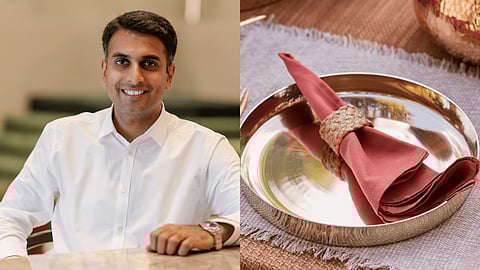
Yogesh Chaudhary’s perspective is shaped by years of working closely with artisans. As Director of Sales and Marketing at Jaipur Rugs, a Jaipur-based brand offering handcrafted rugs and carpets by rural artisans of India, his engagement with design goes far beyond aesthetics, encompassing process, provenance, and long-term value.
When asked about his favourite Indian brands rooted in craft, Chaudhary focused on makers who are preserving skills. This selection spans five brands, from the UNESCO-listed metalwork of P-TAL to Pero's anti-fit textile philosophy.

“I support P-TAL for its revival of the UNESCO-listed Thathera craft,” says Chaudhary. The brand works with an ancient metalworking tradition once on the brink of extinction, reinterpreting Ayurvedic principles into contemporary brassware. What stands out is the clarity of intent. “Each piece feels functional but also deeply meaningful,” he adds, pointing to the way heritage and everyday use coexist without dilution.
“My appreciation for PDKF Jaipur comes from its dual focus on craft and women’s independence,” Chaudhary notes. Rooted in Rajasthani artisanal traditions, the foundation works to preserve embroidery, textile, and surface crafts while ensuring sustainable livelihoods. “The women are not just artisans. They become custodians of heritage,” he says, underlining the organisation’s people-first structure.
Khanoom draws Chaudhary in for its quiet storytelling. “What captures my imagination is how miniature art becomes part of everyday life,” he says. Hand-painted ceramics featuring botanical motifs turn functional tableware into narrative objects. “They are meant to be used, not displayed,” he adds, pointing to the brand’s balance between art and utility.
“I see her jewellery as wearable architecture,” says Yogesh. Kavya Potluri’s work explores strong, sculptural forms anchored in demi-fine Indian craftsmanship. “There’s strength, but also softness,” he explains, noting how clean silhouettes and fine detailing coexist. For him, the appeal lies in how each piece feels intentional rather than ornamental.
Pero resonates for its refusal to chase trends. “Its anti-fit philosophy puts textiles first,” says Chaudhary. Beneath the relaxed forms lie hand-stitched details, patchwork, and texture revealed over time. “These are clothes that reward closeness,” he notes, describing Pero as a reminder that fashion can still be slow, intimate, and human.