Subscribe

- Motoring
- Yachting & Aviation
- Style
- Home & Design
- Travel
- Food & Drink
- Specials
When I first saw the pictures online, I thought it was AI,” quipped Rachel Sarah, the photography assistant, while on location for this exclusive cover shoot of Robb Report India’s inaugural travel issue. “For me, it has been a dream destination,” added Belgian photographer Dirk Alexander, a self-proclaimed promoter of Saudi.
The magnetism of Saudi isn’t new. For centuries, the desert nation has been a hub for traders—and, over time, a destination for travellers seeking lessons in tradition, technology, and Middle Eastern tastes. In 2024 alone, the country recorded over 29.7 million international tourists, according to the Saudi Ministry of Tourism’s Annual Statistical Report. Around the same period, Saudi advanced its Vision 2030—a national framework aimed at diversifying the economy, promoting sustainability, and positioning the nation as a global tourism and cultural hub. Central to that vision is The Red Sea, now recognised worldwide as one of the nation’s flagship ambitious ‘regenerative tourism’ projects.
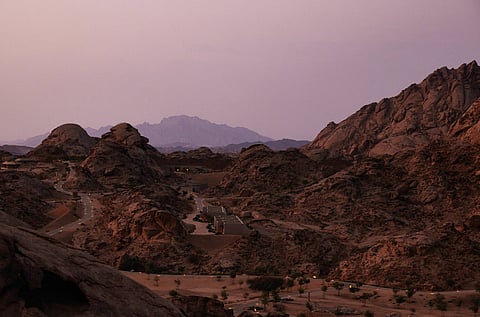
Ironically, my first impression of The Red Sea (visitredsea.com) is anything but green. Instead, rolling ochre dunes dotted with sparse shrubs stretch endlessly below. Its distinctive Red Sea International Airport, designed by Foster + Partners in the shape of five dune-like pods arranged radially around a central drop-off and pick-up space, pays homage to this striking desert landscape. A short drive later, the scenery begins to shift. The flat stretches give way to rugged terrain—striated cliffs, pockets of vegetation, and stones burnished by centuries of wind.

The Red Sea, as a region, holds historical and cultural significance. Its waters once formed one of the world’s most important maritime routes, linking the Mediterranean with the Indian Ocean and enabling trade between Asia, Africa, and Europe. In the modern context, The Red Sea is a story of reinvention. Envisioned by Red Sea Global, the development spans over 28,000 square kilometres of desert, islands, and coral reefs. The aim is clear: to create a model for ‘regenerative tourism’ that protects natural ecosystems while setting new benchmarks for design and sustainability.
Every element of the project, from renewable energy systems to low-impact architecture, has been designed to ensure that the region remains as untouched as possible. By limiting visitor numbers and ensuring that 75 per cent of the islands remain undeveloped, Saudi hopes to redefine luxury travel. In fact, The Red Sea already has seven resorts in the region, including Nujuma - A Ritz Carlton Reserve, St. Regis Red Sea Resort, and Six Senses Southern Dunes. 10 more hotels are in the pipeline, such as Fairmont, Four Seasons, and Raffles.
As we continue our drive from the airport, the cliffs draw closer. There are no markers of arrival here—no gates, no manicured pathways, no sudden bursts of greenery. True, clearly marked signboards lead the way, but I’m mentally lost in the seemingly endless dunes instead. The driver has English pop music playing on the radio; I, however, realise how vast silence can feel. The music fades into background noise; I can hear the crunch of gravel beneath the tyres and the faint sigh of wind brushing past the cliffs. Either that—or my senses have dialled up on the hyper awareness quotient as a city girl unaccustomed to emptiness. But I’m not complaining.
The car stops in what looks like the middle of nowhere. “This way,” the driver signals, pointing towards crevices in the cliffs. If the expansive landscape wasn’t beautiful enough, the terrain transports me straight onto the sets of an Indiana Jones film, except that here there are no booby traps, no dangers, and no artefacts to be secured before the enemy gets to them—just lots of poshness.
As I make my way through the narrow canyon, the towering rock walls on either side open to a pathway lit by lanterns. From concealed speakers, a voice welcomes me in Arabic: a greeting backed by soft, atmospheric music that seems to echo off the rocks.
As the passage widens, the reception of Desert Rock (desertrock.sa) comes into view—if one can call it that. There’s no imposing façade, no grand portico announcing arrival. Instead, the lobby is carved into the rock, blending seamlessly with the ochre cliffs around it. A quick welcome drink, followed by wet towels to wipe my hands, and I’m whisked away into the wadi.
The resort, I’m told, spans 30,000 square metres. I fail to see how, considering there are massive cliffs with no semblance of rooms in front of me. Despite being roughly half an hour away from The Red Sea International Airport, I forget I’m in Saudi and convinced I’m on another planet.
Designed by Oppenheim Architecture, the resort quite literally disappears into the terrain. Villas and suites are carved into the cliffs or tucked between rock formations. I’m taken to one of the 64 villas for a closer look—and possibly the most dramatic accommodations I’ve ever seen: the Cave Suite. Reaching it requires stepping into a cove, from where I get into a lift that opens onto a platform overlooking the desert. I walk through carpeted passageways carved straight into the mountain. Boulders spill naturally into the living space, curtains glide back to reveal cinematic vistas of the wadi, and the interiors embrace natural textures, keeping comfort at the forefront. A private cliffside plunge pool sits in the terrace, offering a kind of solitude I crave back home.
On the inside, the walls retain the raw geological landscape, with natural stone and sand-toned plaster, made better with wooden accents on the furniture. Despite its rugged appearance, the suite is fully climate controlled, and the plush Frette linens on the bed make it immediately clear that comfort is not compromised.
At the Cliff Hanging Villas, my jaw drops. Partly owing to the grandeur that awaits inside, and partly because of the villa’s geological formation. As the name suggests, the villa is perched on the edge of the massif. From the terrace, I can see the wadi stretching out in all directions, framed by jagged cliffs and rock formations. Inside, natural stone, sand-toned plaster, and wood are used throughout—a nod to the dramatic scenes beyond the floor-to-ceiling windows. The villa has a generous living space, a plush bedroom with Frette linens, and a luxurious bathroom complete with a freestanding stone bathtub, and a separate rain shower. However, I’m eyeing the private infinity pool positioned at the cliff’s edge to beat the heat. As the sun settles, the spacious outdoor terrace allows for stargazing or simply taking in the silence of the surrounding mountains, broken only by the occasional call of birds echoing through the cliffs.
Despite the gorgeous villas, the heart of Desert Rock lies within the wadi and the experiences that surround it. For those craving movement, the resort offers guided hiking and rock-climbing excursions, as well as aerial yoga sessions in a pavilion overlooking the cliffs. I sign up for a sunset stargazing experience, led by a local astronomer who points out constellations. There’s also the fitness centre, two outdoor pools, and thoughtfully curated nature walks through Wadi Khuf, where guides share insights about the native flora and the region’s delicate ecosystem
For a higher vantage point, The Observatory steals the deal. Reaching it isn’t easy—you follow a narrow bridge strung over the canyon, then climb 630 steps up the mountain. As night falls, I’m told shisha lounges, themed mocktails, and a platter of pastries await, while telescopes and laser pointers guide guests through the constellations. My heart itches to experience it all; my panting breath signals otherwise. Instead, I marvel at the scene from the bridge—also a steep hike, if you ask my lungs—and salute the staff hiking to the top with a picnic basket ready in hand.
Luckily, you don’t always need to trek for your meals at Desert Rock, though! At Nyra, the open-plan layout looks out onto the desert, and the kitchen celebrates locally inspired flavours with a modern touch. At Basalt, aptly named for the volcanic rock found in the region, the space is airy, casual, and perfect for slow mornings. The spread features Middle Eastern staples like shakshuka and labneh alongside international favourites. The Wadi Pool serves Peruvian-inspired ceviches and wood-fired pizzas; the cosy Library Lounge keeps it casual with falafel wraps and stacked burgers, and Mica, an openair lounge, spins Arabic remixes alongside Western hits, shisha smoke drifting as the evening sets in.
A special shout-out to The Music Room, home of over 400 vinyl records, from Fleetwood Mac and Adele to Saudi singer Mohammed Abdu and Michael Bublé. Before leaving, I settle into the retro-inspired lounge, drop the needle on a record, and tune out with music from around the world—a perfect way to unwind after a day of exploration.
While Desert Rock is a gem tucked away in the wadis, its counterpart in the region, Shebara (shebara.sa), is already on the global radar. Unlike the secluded cliffs and rugged terrain of Desert Rock, Shebara is celebrated for its overwater villas and sun-drenched lagoons. Its reputation precedes it, drawing travellers who seek the serenity of turquoise waters, including me.
Perched on a chain of untouched islands off Saudi’s Tabuk Province, the resort rises from The Red Sea like something out of a science-fiction dream. Designed by Dubai-based Killa Design and developed by Red Sea Global, Shebara features 38 overwater villas and 35 beachfront retreats, its mirrored orb-shaped architecture reflecting the sky and sea until the boundary between building and landscape nearly vanishes.
I arrive by boat from Turtle Bay Hotel (turtlebayhotel.sa). From a distance, the mirrored overwater villas glint like scattered pearls on turquoise water. Stepping onto the dock, I notice that the orbs are made using stainless steel. “An odd choice for a desert destination,” I wonder out loud referring to the material’s naturally heating properties. The team clarifies that a special coating over its surface prevents heat traps. Ingenious!
Inside the villa, Paolo Ferrari’s vision of “natural futurism” is immediately tangible. Curved reflective walls guide me through the space; finishes include travertine with its marble-like surface, brushed steel, oak, leather, and wool, with bronze accents and mirrored surfaces. The furniture is shaped by the villa’s curved geometry. Curved oak and lacquered furnishings fit seamlessly into the space, and hydraulically operated bar cabinets with red leather interiors add a functional, sculptural feature. Freestanding onyx beds, travertine bathtubs, and steel-accented sinks integrate with the architecture. Leather-clad walls mark different areas without traditional partitions, maintaining a sense of openness.
Shebara’s interiors set the stage, but the resort’s culinary offerings are equally remarkable. Iki.Roe offers a modern Japanese–Nikkei experience, blending Japanese and Peruvian influences. The Solera Bar, located alongside the venue, serves non-alcoholic elixirs inspired by Japanese and Peruvian ingredients. Ariamare, led by chef Marco Garfagnini, specialises in Mediterranean seafood and handmade pastas. Lunara serves all-day meals, combining Middle Eastern, European, and Asian dishes prepared with locally sourced, sustainable ingredients. Saria Pool Bar & Grill offers Levantine-inspired light fare and charcoalgrilled dishes, perfect for casual beachside lunches or sunset bites. For a more serene experience, Solera, an adults-only poolside venue, features mocktails, handcrafted infusions, and light, shareable plates.
Guests can embark on snorkelling and scuba-diving excursions or take kayaks and stand-up paddleboards directly from their villa decks. For a completely different kind of immersion, I tried the floating sound bath—an experience designed for deep relaxation and sensory awareness. Lying on the water on a floating mattress, I felt the gentle buoyancy while harmonic sounds from gongs and chimes resonated through the air and water. The combination of movement, sound, and silence was unexpectedly grounding.
The resort also features a spacious spa, offering treatments inspired by local marine and desert ingredients, including pearl and caviar therapies and meteorite scrubs. Adventurous guests can explore nearby islands by boat, discovering untouched beaches and mangrove ecosystems, while a dedicated kids’ club offers nature-based activities, underwater exploration, and creative workshops. Evenings at Shebara are ideal for stargazing programmes, with telescopes and laser pointers tracing constellations and historic navigation routes used by sailors in The Red Sea.
I ditch the activities and decide to simply sit by the waters, watching the waves quietly lap against the stilts below. The mirrored shells of the villas catch the last rays of the sun, and the lagoon feels suspended in time. No music, no chatter—just the faint ripple of water, the soft sigh of the breeze, and the occasional call of a distant seabird. In that stillness, I realise: The Red Sea isn’t a scene conjured by AI—it’s real, it’s raw, and it’s the kind of silence you can only find when the world falls away.
For more details log on to visitsaudi.com