
Subscribe
Subscribe
- Motoring
- Style
- Home & Design
- Travel
- Food & Drink
- Specials
- News & Tech
- Videos
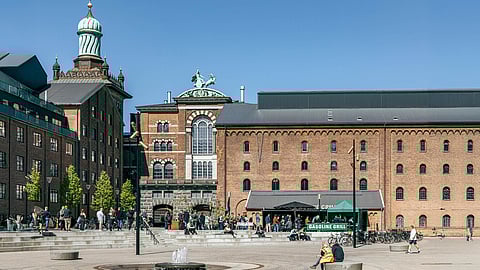
Copenhagen has long been a vanguard of sustainable architecture and design-forward interiors. So it’s no surprise that when the vast land and former factories of Denmark’s world-famous beer manufacturer, Carlsberg, lay unused for years, the city’s residents stepped in to revitalise the closed-off area.
The result?
Buildings that once stored yeast and malt now house trendy art galleries, cutting-edge design stores and buzzing coffee shops.
Welcome to a new urban destination that blends history, creativity and gastronomy.
But where to begin?
Meandering through the district’s web of cobbled streets and lively squares, the old blends seamlessly with the new. Historic buildings that quietly weathered years of neglect are now revitalised as modern, raw and edgy design stores and art galleries.
Then there's Hotel Ottilia, housed in the former brewery–achingly stylish with its blend of distinctive original features and contemporary Nordic design.
The hotel retains original architectural features like copper-clad silos and round brewery windows, but it's in the public spaces and bedrooms is where the real transformation comes to life. There are 155 rooms and suites, all bathed in industrial-chic style. Some feature raw concrete details and open bathrooms, while others offer elegant arched windows and herringbone floors.

Food Forward
The district is a mix of commercial and residential buildings, lively food spaces, cafes and bars. Every restaurant is handpicked, making sure that only one pizzeria, one burger joint and so forth is located within the same zone, creating small independent food scenes.
It’s always a good idea to start with breakfast at Cadence, where star chefs and bakers curate a menu featuring modern, health-forward brunch options, specialty coffeevand sourdough-based bakery goods. Try the Turkish eggs made with fermented coconut labneh (with fresh sourdough to mop it up), or the mushroom toast on house-made brioche topped with truffle and celeriac cream, served over a bed of seared shitake and portobello mushrooms.
Stroll through J.C. Jacobsen's Garden with your matcha latte in hand and you might feel like you're in New York’s Central Park, as the lush green topography provides a welcome respite from the hustle and bustle of the surrounding commercial spaces.
For a light lunch, Aamanns Deli—the mecca of modern, organic smørrebrød, or open-faced sandwiches—is a perfect grab-and-go option.
Expect some of the best smørrebrød in town—actually, the best in 2019, according to the Association of Danish Food Critics. Marinated herring with elderflower, rhubarb, crème fraiche and delicious homemade schnapps make for an unforgettable treat.
Venture onward and spend the afternoon at the stylish Aire Ancient Baths. Housed in a historic building dating back to 1881, this serene sanctuary invites you to try the Argan Foam Ritual, where therapists drench you in argan oil after slathering your body in a sea of soft, foamy bubbles. Or, surrender to the weightless sensation in the Flotarium. Time truly stands still here—you can't bring your phone inside, and there are no clocks!
No meal in Copenhagen is complete without dining at a restaurant that isn’t linked to a Michelin star. Studio offers modern Scandinavian cuisine with an international edge. Led by chef Christoffer Sørensen (recipient of the Michelin Guide’s ‘Young Chef Award’), the menu is light yet intensely flavourful, with standout dishes such as pea and mint tart, monkfish with sauce vierge and gooseberry pavlova. Mid-century furniture, clean lines and harbour views provide the perfect backdrop.
Recreational Rites
Some of the trendiest stores have a new address and it’s in this neighbourhood.
Once again, the curation is thoughtful—a mix of the accessible and the high-end. Among them are the first-ever flagship of the Danish furniture company PP Møbler and the exuberant workshop-boutique of Henrik Vibskov, the fashion brand that, according to fashion pundits is currently one of the most talked-about in Europe.
Art lovers can immerse themselves in the quirky exhibits at Von Bartha, a Swiss cross-generational gallery.
“Large art installations and pioneering architecture have been an integral part of the area from the very beginning. As a result, the Carlsberg neighbourhood has become an important part of the Danish cultural heritage and home to many of Copenhagen’s architectural treasures," says Peter Bur Anderson, creative director of BRIQ, the firm responsible for developing the Carlsberg District.
If you're short on time and want an expert guide to navigate this exciting new area, the best way to explore this architectural gem is by signing up for one of the walking tours that start at the famous Elephant Gates.
Beyond all the new development, the true heart of the district lies in its deep connection to beer.
Head to the Carlsberg museum—a lively, interactive space within Jacobsen’s original brewery—that explains the history of beer production, the family's legacy and its contribution to the cultural and economic tapestry of the city. Beer tastings are included, of course.