
Subscribe
Subscribe
- Motoring
- Style
- Home & Design
- Travel
- Food & Drink
- Specials
- News & Tech
- Videos
With jewellers’ love affair with India showing no signs of slowing, six independent designers share their love of nature, architecture, textile, culture, and even spirituality — and several ways in which these inspirations have resonated with them. The result is colourful, and a lot more fun.

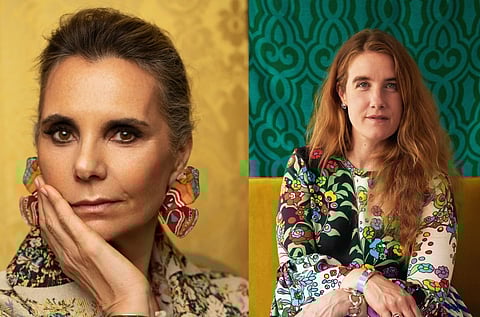
Alice Cicolini designs poetic jewels that celebrate the evocative art of enamelling. India has long fascinated this British designer whose sojourns to the country began in the late 1990s as a young curator for the British Council. Returning in 2004 to live here for five years, she immersed herself in a visual language that would inform her work. She became “particularly interested in traditional Indian technique of meenakari,” and has sought to make it relevant since. Juxtaposing delightful influences, Alice delves into her fascination on how she “could get people — young people, in particular — to look at meenakari through a contemporary lens.”
The British designer incorporates a substantial amount of narrative in her colour-suffused creations, working with her beloved master artisans in Jaipur, including Kamal Assat Meenakar, for compelling champleve limited-edition pieces. She draws on “vibrant patterns and rich forms seen across the Silk Route, from northern China to Turkey.”
She teamed up with Indian homegrown luxury jewellery brand, Zoya, this year, and philosopher and explorer Alexandra David-Neel became the muse, as did her travels to Lhasa. For this collection, Alice adapted stratified layers of Tibetan architecture into an enamel embellished 18k gold capsule line.
Several creations of Brazilian designer Silvia Furmanovich have drawn inspiration from India, with her newest offering, Kashmir Collection, reflecting the valley’s landscapes and artistry: paisleys, chinar leaves, lotus flowers, and tulips add depth to the line. She employs miniature painting, wood marquetry and inlay artistry to embellish her jewellery, clutches and home accessories, as she translates motifs from papier-mâché objects and patterns from traditional Kashmiri textiles. In her earlier works, Silvia has incorporated Rajasthani miniature painting to highlight themes from courtly life and nature. Incorporating this craft into jewellery allows her to “both honour the artisans, who keep this tradition alive, and bring it into dialogue with contemporary design.”
“Both regions, Kashmir and Rajasthan, have profoundly influenced my creative vision,” she shares, adding that Rajasthan’s palaces, temples, and miniature paintings, and Kashmir’s breathtaking natural beauty, papier-mâché craft, and rich textile traditions have all been embellished across her 18k gold works.
India has been integral to Van Gelder since Bernadette van Gelder first travelled through the subcontinent in the late 1970s. Her daughters, Fleur Damman and Noëlle Viguurs, grew up surrounded by the treasures: antique treasures she collected; listening to their stories, and learning to appreciate their symbolism and craftsmanship at a young age.
“From early on, we knew we wanted to expand the family business, to grow Van Gelder into a fine jewellery house in its own right,” says Fleur. When the siblings founded Van Gelder Designs in 2019, India became not only their inspiration but also a dialogue partner and “source of ongoing exchange where heritage and authorship meet, and where our perspective continues to evolve into jewellery that feels universal, timeless and distinctive.”
One of their most evocative collections, Baoli, was inspired by India’s stepwells. “Walking down these staircases, light shifts, sound fades, and space becomes an optical illusion. We translated this experience into jewels with layered geometry, enamel gradients, and gemstones that evoke reflection and depth.” The artisans they work with in Jaipur are not merely executors of their designs. “They are co-authors of our vision,” shares Fleur.
While majoring in Art History at university in Boston, Noor Fares recalls becoming deeply interested in Ancient Indian culture and Hinduism and began dreaming of visiting India. “One of my classes was about Indian Art and Architecture, and another focused on Hindu deities.” On her first trip fifteen years ago, accompanied by her best friend, “it was the beginning of a great love story,” recalls the London-based, Lebanese designer. “I felt so inspired by the colours, the aesthetic and the endless choice of stones in the pink city. I was fascinated by the skilled artisans in various crafts related to jewellery and textiles.” Noor subsequently moved the production of her eponymous label to Jaipur. “Travelling to India became a yearly pilgrimage; I would combine a visit to Jaipur with a new destination every time,” adds the designer, citing Hampi, Varanasi and Jaisalmer as key sources of inspiration.
Noor works closely with stone carvers and handpicks gemstones from dealers for her pieces, many of which draw on Indian philosophy and yoga practice. The jewellery rendered in 18k gold consists of Sri Yantra pendants and the Flower of Life collection, which reference mandalas and sacred geometry, while the Mala Pendant, a traditional Navratna piece, unites nine gemstones representing the planets in Vedic astrology, she informs.
Ann Korman's grandfather’s travels had long sparked her imagination, and when she finally arrived in India for the first time in 2010, she felt it was unlike anywhere she’d ever been. Ann spent the most time in Rishikesh, where yoga and meditation shaped her perspective. “The energy there is transformative, both grounding and expansive, and it continues to influence the way I approach creativity and life,” shares the Los Angeles-based designer.
“India is woven into the foundation of my creative journey. From the dreamlike visions of my first collection to the lunar symbolism of my most recent work, it has been both muse and guide,” she says. French plique-a-jour enamelling techniques, mystical meanings derived from mandalas, and yantras — tantric sacred geometry, celestial themes, and gemstones chosen for their energetic qualities, are inherent in Ann’s 18k gold pieces which serve as modern-day talismans.
Brazilian designer Lily Gabriella’s creative vision for the Damali collection has been shaped by the beauty and richness of South Indian heritage — its intricate patterns, temple carvings, and vibrant textiles. “I immersed myself in the culture through research, imagery, and dialogue with artisans, allowing these visual and cultural elements to inspire each piece,” explains the London-based jeweller. The result is jewellery that celebrates the elegance, colour, and storytelling of South India, which Lily has “reinterpreted in a contemporary, sculptural language.”