
Subscribe
Subscribe
- Motoring
- Style
- Home & Design
- Travel
- Food & Drink
- Specials
- News & Tech
- Videos
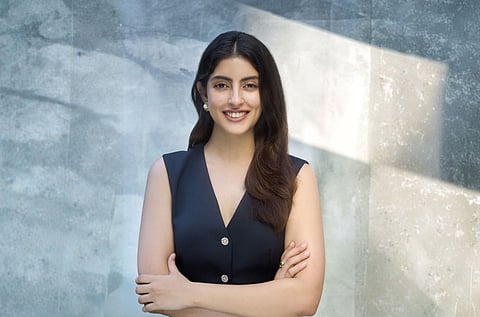
There is nothing quite like witnessing the youth take charge — stepping forward, leading with purpose, and championing initiatives that truly make a difference. Navya Naveli Nanda stands out as a bright force; her philanthropic work is aimed at improving lives and expanding opportunities for women across the country.
Through her non-profit Project Naveli, Nanda has been working to provide women with social and economic independence. As the co-founder of the Nimaya Foundation, she is helping accelerate women's careers, and with Aara Health, another venture she co-founded, Nanda is working on women's healthcare and awareness. Her efforts extend further into entrepreneurship through initiatives like EntrepreNaari. Across every project, one theme remains constant: empowering women in every sphere of their lives.
This month, as we celebrate stories of impact at Robb Report India, we speak to Navya about philanthropy, the causes closest to her heart, and more.
Navya Naveli Nanda: I believe that philanthropy is ingrained in all of us. It is an inherent trait of human beings to share and give back to society – that is what I have learnt so far in my journey in the development sector. It is never about the size of what you are giving but the depth of impact or change it can create in someone's life. Impacting one person's life in the smallest of ways is an act of philanthropy and must be championed further. It has also taught me that we need to shift our mindset from "charity" to "social investment" - investing in people so they can build their own future.
NNN: Like I said earlier, philanthropy is inherent. I am also an extremely proud Indian, and want to play my part in giving back to my country. We all have a moral responsibility to leave society better than we found it, and my initiatives are a way for me to do that for those around me. Another catalyst was reading the World Economic Forum’s Future of Work report. It highlighted how many women would be left behind if they weren’t upskilled for the AI age. That realisation moved me from just "wanting to help" to wanting to build concrete solutions like Nimaya to bridge that gap.
NNN: Because money alone doesn't solve systemic issues—ecosystems do. When we talk about empowerment, we often stop at "giving a job." But what if that woman is facing domestic violence at home? What if she doesn’t have legal awareness? What if she has no access to menstrual hygiene? Meaningful philanthropy looks at the whole woman. That is why, through Project Naveli, we don’t just focus on one thing; You have to remove all the barriers, not just the financial ones, to truly let a woman thrive.

NNN: I always tell young people: Do not underestimate the power of your voice. You don't need deep pockets to be a philanthropist.
NNN: My heart is firmly with gender equality, but specifically:
NNN: We work with SEWA (Self-Employed Women's Association) in Gujarat. I met a woman there who had suffered from domestic violence for a long time. After joining our program and gaining financial literacy, she finally got her own bank account and debit card. She told me that the next time her husband tried to be aggressive, she simply held up her debit card. That card wasn't just plastic to her; it was her shield. That moment changed my perspective—it showed me that empowerment isn't abstract; it’s about giving someone the tools to reclaim their dignity.
NNN: My hope is that we move away from "CSR as a checklist" to legitimate, strategic social investment. I want to see NGOs thinking like startups—scalable, ambitious, and data-driven.
You are never too young to stand up for what is right. We are the generation that will shape the next few decades of this country. If we can combine our ambition with empathy, we won't just build a strong economy; we will build a kind one.