
Subscribe
Subscribe
- Motoring
- Style
- Home & Design
- Travel
- Food & Drink
- Specials
- News & Tech
- Videos
AI generated summary, newsroom reviewed
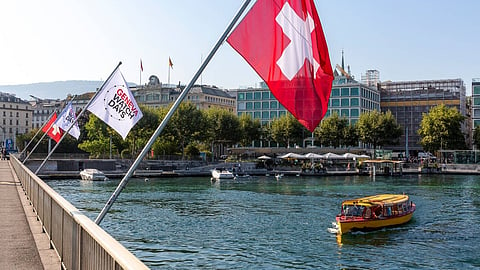
Like every spring, Geneva Watch Days 2026 this year runs from September 2 to 6, its seventh edition, and this time seventy-one brands will take part, with plenty of new watch releases and a programme aimed at everyone from beginners to seasoned collectors. Geneva Watch Days is scattered across the city, free to attend, and built on the very premise of proximity between visitor and watchmaker.
That premise was born of necessity. The first edition took place in 2020, precisely when the pandemic upended the watch industry's usual trade-show calendar. Six founding brands — Breitling, Bulgari, De Bethune, Girard-Perregaux, H. Moser & Cie. and MB&F — launched what has since become a fixture of the annual calendar. Six years on, the guest list has swelled considerably, mixing horological royalty with names most visitors will never have encountered on a shop floor: Konstantin Chaykin, Laurent Ferrier, Urwerk, Czapek, Naoya Hida, Otsuka Lotec, Mauron Musy and dozens more sit alongside Zenith, Oris, Doxa, Bulgari and Breitling.

The event pivots around two venues on the Rotonde du Mont-Blanc, by the lake: the Main Pavilion, where brands host their own stands and hold the bulk of the talks, and the Blue Box, a short walk away. The Blue Box houses this year's headline exhibition, staged by the Fondation de la Haute Horlogerie under the title Air, Earth, Fire, Water — 4 Elements in Time, showing over 130 timepieces grouped by element rather than by brand — a deliberate attempt to let visitors experience the watches rather than merely inspect them through glass. Entry is free, the Blue Box opens from 10:30am to 6pm Thursday through Saturday and until 4pm on Sunday, and FHH-certified guides run English and French tours daily, each half-hour slot dedicated to a single element.
Wednesday September 2 is the soft opening: both venues open their doors at 2pm, with a Konstantin Chaykin workshop on mechanical-geometric painting running from 3 to 5pm (fifteen places only), before an official inauguration closes the evening at 6:30pm.
Thursday is where the substance sits. The Main Pavilion opens to the public from 10am to 5:30pm. The CaliberShip Challenge runs for most of the day, pitting twenty participants — coached by students from the Geneva Watchmaking School — against each other in watch regulation using Sellita movements, judged by COSC. At noon, Deloitte's Karine Szegedi presents a study of the Swiss watch ecosystem from production through to the secondary market, and the afternoon turns philosophical: a panel convened by the Fondation Dominique Renaud, featuring astrophysicist Katie Mack, physicist Didier Queloz and cosmologists Janna Levin and Thomas Hertog, asks whether time itself is real or a construct of perception.
Friday leans into the industry's anxieties. A morning panel — AI's Influence Creep — examines what happens when algorithms rather than editors and retailers start answering the question of which watch to buy. At 2pm, a symposium moderated by Marteau's Arthur Touchot interrogates whether desirability in luxury watchmaking is generated by the object or by the story wrapped around it.
Saturday belongs to the next generation. The GPHG Tribune: Next Gen, from 2.30 to 5pm, opens with a presentation of this year's Grand Prix d'Horlogerie de Genève before a conversation with François-Henry Bennahmias, the former Audemars Piguet chief executive. The day winds down with a Garden Party from 8pm, live music included.
Sunday is shorter and gentler. A Kids' Club, run with the Musée International de l'Horlogerie, introduces children aged eight to twelve to watchmaking from 10:30am to noon — the one clearly family-oriented slot in the entire programme. The week closes with a debate titled The Great Polarisation, examining the widening gap between established maisons and emerging brands, before the Main Pavilion shuts its doors at 4pm.
Nobody attends every session, and the organisers seem to know it: the programme is deliberately layered so that collectors, industry professionals, students and families each have a distinct route through it. Collectors will find the Blue Box, the CaliberShip Challenge and the Touch & Feel sessions with younger brands most rewarding, though several of those sessions are invitation-only. Industry professionals should prioritise the CEO breakfasts and the Deloitte and AI panels. For everyone else, the simplest approach still holds true: pick a thread, follow it, and let Geneva do the rest.