
- Motoring
- Style
- Home & Design
- Travel
- Food & Drink
- Specials
- News & Tech
- Videos
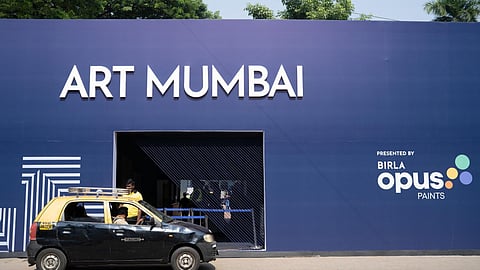
When ART MUMBAI opens at Mahalaxmi Racecourse tomorrow on November 12, it will do so with 94 galleries under one roof, 21 of them from outside India. The fourth edition, presented by Birla Opus Paints, runs until November 15. For co-founders Dinesh Vazirani and Conor Macklin, it is a chance to see how far the idea has travelled.

"When we started, we wanted to create a cultural festival in India that brought together galleries from both India and overseas," says Vazirani. "We seem to have achieved that, as this year we have 94 galleries, of which 21 are international."
The programme has grown with the gallery list. Beyond the booths, visitors will find music, performances, interactions, the Speaker Series and Bollywood. "Yes, the fair is quite close to what we originally envisioned," he says. "This is our fourth edition, and our priorities remain the same."
Those priorities are not modest. "We want ART MUMBAI to be the highest-quality art fair in the world. It should offer a seamless experience where people feel comfortable in their surroundings, enjoy themselves and spend hours exploring art."
The Speaker Series is where the fair makes its case for being more than a marketplace. Six conversations are planned. Javed Akhtar and Baaraan Ijlal, moderated by Ranjit Hoskote, will discuss how poetry and painting translate memory and urban life. Lydia Yee, Manuel Rabaté and Minal Vazirani will look at how institutions in Asia and the Middle East are expanding. Hoskote and Vishal Dar will examine public art in India, from SITE Jodhpur to the sā Ladakh Biennale. Other sessions cover immersive technology and women artists, the latter built around Indu Antony's practice.
Vazirani says the themes were chosen to answer questions the art world is already asking, "both locally and globally." He adds: "We believe an art fair should offer more than an opportunity to view or acquire artworks. It should also create opportunities for people to engage with different practices, ideas and perspectives, and develop a deeper understanding of the art they encounter."
Guided walks of the fair return, and extended hours on Friday and Saturday evenings give visitors longer to take it all in.
The international presence is not only about numbers. Vazirani points to a shift among buyers at home. "We are also seeing growing curiosity among Indian collectors about art from across the world, as well as interest in different mediums and artistic approaches."
Mumbai, he notes, is a natural host. "Mumbai has played a central role in the history of modern Indian art and continues to have a strong community of artists, galleries, collectors and institutions."
Macklin, who speaks for the international side of the fair, says interest from overseas galleries "has grown steadily with each edition." The November dates have helped the fair find a place in the international calendar. "The city is India's financial capital, but it is also one of its most important cultural centres, with a rich history of art schools, museums, galleries and auction houses," he says.
What has pleased him most is happening outside the racecourse. "An encouraging development has been the way the wider art community in Mumbai has begun to align its programming with the fair's November dates." Exhibitions and openings across the city now cluster around the fair, which, he says, gives local institutions and artists "greater visibility and opportunities to connect with new audiences and buyers."
For those starting out, Macklin keeps it simple. "I would encourage young collectors to approach a fair with curiosity and an open mind. Look beyond familiar names and take the time to discover artists whose work you may not know. Ask questions, understand the context of the work and engage with the galleries."
He is wary of treating collecting as a purely financial exercise. "Collecting should be informed, but also personal. Look for work you feel a connection with. Market reputation matters, but it shouldn't be the only reason to collect."
Asked what meaningful growth looks like, Vazirani points first to institutions. "Yes, we would like to see greater institutional participation, as that always elevates a fair." The larger hope is about conversation. "We would also like to create an environment that serves as a hub for discourse, debate and, hopefully, new ideas that can take Indian art to another level."
Macklin's ambition is as plain. "Ultimately, we want ART MUMBAI to be the place for anyone looking to understand the Indian and wider South Asian art market, discover its galleries and artists, and engage with its collectors. The growing international interest suggests that we are moving in that direction."
ART MUMBAI 2026 runs from November 12 to 15 at Mahalaxmi Racecourse, Mumbai. More at artmumbai.com.