
Subscribe
Subscribe
- Motoring
- Style
- Home & Design
- Travel
- Food & Drink
- Specials
- News & Tech
- Videos
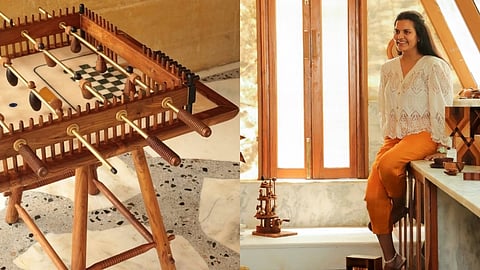
In a world of chaotic, fast-paced modern lifestyles, the design studio, SHED, feels like an oasis of calm. Where other studios are out chasing the new, SHED takes its time. A lesson in tactile minimalism and quiet architecture, SHED’s products channel slow and joyful living.
Surrounded by greenery, this sun-dappled space in Surat is run by Priyanka Shah, a Parsons School of Design graduate. An architect by training, Shah took a sharp turn early on — away from blueprints and into the world of materials.
In 2016, Shah (and SHED) made their international debut at the India Pavilion of the London Design Fair, introducing global audiences to a language of design rooted in Indian craft, sculptural form, and quiet materiality, and instantly catapulting to fame. There’s been no looking back since then.

RR: SHED is rooted in sculptural form and Indian craftsmanship. How did your design journey begin, and what led you to create a brand that lives at the intersection of art and utility?
Priyanka: I trained as an architect, but my real education came from working closely with materials — wood, clay, stone — and the people who shape them. India gave me access to these people in abundance. Processes of making are still very decentralised and informal here. I always saw a lot of possibilities and potential in intervening in these structures and systems, and interjecting with my personal design iterations and expressions without a lot of expense. Everybody was open to R&D and trying things out to make them better. I was interested in creating a practice drawing from these observations and a synthesised way of making things that lie on the intersections between art, craft, and design.
RR: Many of your pieces feel like functional sculptures. What inspires the shapes, forms, and materials you work with? Do you approach your objects as design, art, or both?
Priyanka: I don’t separate the two. The way a form works and the way it speaks are equally important. Sometimes a shape comes from a structural need; other times it’s a response to a texture, a curve, or even the way light falls on a surface. I look at vernacular Indian forms, architecture, and natural landscapes as much as I do at everyday tools and objects. The aim is always to make something that feels inevitable — as if it couldn’t exist any other way.
RR: Your collections celebrate slow, deliberate design. In a world of mass production, what does 'handmade' mean to you today?
Priyanka: For me, ‘handmade’ is not just about using one’s hands — it’s about presence. It’s about an unhurried relationship between maker, material, and object. In a fast, automated world, handmade work carries a human fingerprint — the rhythm of the potter’s wheel, the resistance of a chisel — that no industrial process can replicate. That difference is palpable. One way in which I like to think about the relationship between the hand and machine is, we like to think about our pieces without the limitations of machine production; we like to think with the hand, and we are liberal about executing production digitally. For example, even if we've used CNC (Computer Numerical Control) techniques to create marks on a material, we like to remove that reminiscence by doing enough to the works otherwise.
RR: Your palette is earthy, minimal, and often unglazed—what informs your material and colour choices?
Priyanka: We tend to usually not stain or glaze a material with another colour or pigment just for the sake of it. We prefer to leave materials in their inherent natural state as much as we can. Colours and materials are selected based on the narrative that we are chasing.
RR: How do you work with your artisans and potters? Is there a collaborative process, or do you follow a singular design vision?
Priyanka: It’s collaborative, but within a clear design framework. Most of the people I work with are self-taught — they’ve learnt on the job, adapting and expanding their skills as each project demands. They’re incredibly versatile, able to shift between materials, scales, and techniques depending on what’s needed. I set the concept, proportions, and finish, and they bring not just execution but problem-solving and ingenuity. The process is fluid — testing, refining, and aligning to the project’s needs until we get it right.
RR: There’s a growing global interest in Indian design that goes beyond embroidery and textiles. How do you see SHED contributing to this new narrative of Indian minimalism and materiality?
Priyanka: I see it as an opportunity to show that Indian design can be minimal without being empty. We work with traditional skills and materials but strip away excess, focusing on form, proportion, and construction. It’s not about decoration for its own sake, but about letting the making, the material, and the structure carry the years and generations and eras of knowledge and reminiscence. It is exactly this connection that gets drawn with each conversion and deepens the discourse.
RR: Your pieces are found in homes, hotels, galleries—even rituals. Who is the SHED client?
Priyanka: They’re people who notice details. Some are collectors, some are designers or architects, and others are simply looking for objects that feel intentional and well-made. What they have in common is an appreciation for the work behind the object — the hours, the handwork, the material integrity, the narrative.
RR: In the context of luxury, how do you define value?
Priyanka: For me, value is in the sum of material honesty, thoughtful design, and time-intensive making. A material can be expensive, but if the process behind it is careless, it’s not valuable. Similarly, a modest material can be elevated by how it’s handled and what story it carries. The biggest luxury is the time that is embodied, impregnated into our works.
RR: Your pieces feel rooted in timelessness. How do you resist the pressure of trends and seasonal cycles in design?
Priyanka: By not chasing them in the first place. I focus on proportion, material, and use — things that don’t date as quickly as colour palettes or surface treatments. If a piece feels right today and could still feel right 20 years from now, it’s worth making.