Subscribe
Subscribe
- Motoring
- Style
- Home & Design
- Travel
- Food & Drink
- Specials
- News & Tech
- Videos
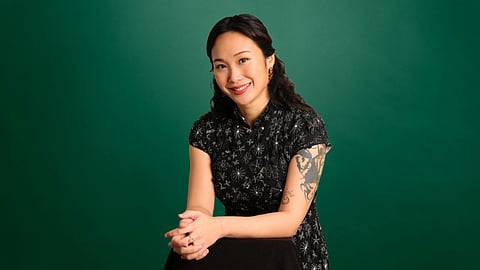
Hong Kong has long been a global financial hub, but as Angelle Siyang-Le points out, it’s now also a cultural hub. It was, after all, the unanimous choice to house the Asian outpost of Art Basel, a prominent global international art fair focusing on modern and contemporary art. In the 12 years since its launch, Siyang-Le has moved up the ladder from being the fair’s Gallery & Project Manager to becoming its Director three years ago. She has, therefore, witnessed up close the swift strides taken by the fair and the artistic community tied so deeply to it.
“Our next show in March 2026 will be my 14th show at Art Basel. It’s been wonderful to see the growth and involvement of the art fair organisers, regular participants, and the growing community of young collectors and art enthusiasts,” says Siyang-Le, as we catch her between meetings at the sunny Atrium of Imperial Hotel, Delhi, on her whirlwind trip to India.
“In the last three years, my team has managed to connect more deeply with the region. During the so-called ‘closet years’ of the pandemic, all of us began to look inwards and reconnect with ourselves. This also led to meaningful engagement with the local and regional art scene,” she adds. “Now, I’m very keen to focus on India. It’s important for us to recruit more Indian art content so we can showcase the true meaning of ‘East meets West’, which is the purpose of our platform.”

A major global trend in the art world, according to Siyang-Le, is the proliferation of younger collectors. Those below the age of 35, many from the UHNI category, are becoming more prominent and active in the arts scene, owing to their exposure to high art from a very young age. For Siyang-Le, these collectors are driven to collect with a purpose.
She explains: “Even before they start collecting, they have a theme for their collection mapped out. Most of them look for work that has close connections with their personal experiences, their upbringing, or causes they believe in and are fighting for. Collections are becoming a brand for the individual collector, even at the beginning of their collecting career.”
Art Basel, Hong Kong positions itself as the go-to interactive space for the visual art communities of Asia to engage with other industries, art lovers, and each other. It’s the ideal place to dive into the narratives behind the art. The ‘Discoveries’ sector, dedicated to discovering new artists, is therefore the most popular.
Another popular section at Art Basel, Hong Kong, is ‘Insights’, dedicated specifically to showcasing the work of Asian artists. In recent years, Siyang-Le has observed galleries and artists increasing the focus on showcasing historical materials to explain the context within which Asian art is created.
Having grown up in London, UK, this global aesthete is acutely aware of the limitations of viewing Asian art through a Western lens. “Through our programming, I wish to present Asia’s contemporary art history from our own perspective, and to educate the rest of the world about it. This is also the reason why I’m in India. We want to make sure that we elevate the entire region’s art scene on our international platform.”
With its vast heritage and thriving art scene, India is a buzzword in every conversation on Asian art. Traditionally, galleries like Experimenter, Vadehra, Jhaveri Contemporary, among others, have always participated in the fair, but now Siyang-Le is keen to widen the net further by including other promising and established Indian artists. She says, “We are open for exchange with new artists and galleries in the region. Even if at this stage, it’s only about creating a channel of communication, there may be collaborative opportunities in the future.”
To this end, Siyang-Le will be touring Delhi, Mumbai, and Ahmedabad on this trip. “We are also looking at exciting cultural institutions that are working to promote the arts in unique ways.”
Siyang-Le’s palpable excitement about the Asian art market is contagious. Her keen outlook and awareness of market trends position India’s art scene as one to watch. However, one wonders if the very nature of art collecting will change with rapid technological changes and massive global shifts underway. When asked about the future of collecting art, she says, “I believe it ties into the idea of showcasing one’s identity and becoming a brand of an individual or an institution. In the future, this will result in art collections being curated with a long-term vision in mind – that of leaving behind a legacy for future generations to cherish and learn from.”