
Subscribe
Subscribe
- Motoring
- Style
- Home & Design
- Travel
- Food & Drink
- Specials
- News & Tech
- Videos
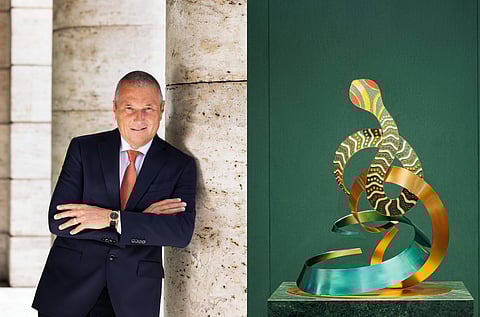
Since taking over as CEO of Bvlgari in 2013, Jean-Christophe Babin has transformed the iconic Roman maison into a multifaceted luxury powerhouse. In this exclusive conversation, he speaks about Bvlgari’s growing love affair with India, the brand’s future strategy, and his personal vision of luxury in a rapidly changing world.
JCB: India, like Rome and China, is one of the ancient cradles of art and jewellery. Each has its own heritage, symbolism, and craftsmanship. We’ve long been influenced by Indian aesthetics. The kada and the mangalsutra are the outcome, but our association is way longer. Ten years ago, we launched a collection of high jewellery, featuring a new cut of precious stones inspired by Jaipur.
India is also a major source of gemstones for us. Its gemological expertise is unparalleled. So, our connection with India goes beyond commercial—it’s emotional, artistic, and historical.
JCB: The Ambanis are central to luxury retail in India. They run Jio World Plaza, Mumbai’s luxury mall, and the Nita Mukesh Ambani Cultural Centre (NMACC), an ambitious venue for global art. We found a natural synergy. Bvlgari is deeply rooted in Roman art and culture, and the NMACC represents India’s growing cultural prominence. For our Serpenti Infinito exhibition at NMACC, we collaborated with Sean Anderson, one of the top curators from The Museum of Modern Art, New York. It became the first high-luxury international exhibition in India—and a milestone for both Bvlgari and the Indian luxury exhibition scene.

JCB: I’ve known her since my TAG Heuer days. She’s not only an incredibly talented actor, but also a connoisseur of jewellery. She works closely with Lucia Silvestri, our creative director, for the jewellery business. She helped us adapt iconic Bvlgari designs into India-centric products like the mangalsutra and the kada.
JCB: It all starts with Roma, the eternal city. We’re the only Roman jeweller, and that’s a unique brand proposition. Since the beginning, I focused on creating one unified narrative based on Rome’s art, architecture, and lifestyle. That meant refocusing Bvlgari on jewellery—its core, making high jewellery the pinnacle of our expression, and applying Roman inspiration consistently across all categories. We don’t just design jewellery. We create the jewel of time in watches, the jewel of hospitality in our hotels, and fragrances inspired by gemstones (Les Gemme). Our iconic Serpenti symbol flows across rings, necklaces, watches, handbags, and more. We’ve built a multi-category brand with one identity. That coherence has made a big difference in market perception and customer loyalty.
JCB: High jewellery is our artistic and creative summit. These are one-of-a-kind pieces with timeless value. [It is] essentially art. Of course, most people engage with Bvlgari through regular jewellery, which is more accessible. But even in watches, bags, and fragrances, the Roman DNA and symbolic motifs—like Serpenti—are always present. The inspiration flows downward, ensuring coherence across all product lines.
JCB: Yes, it’s finally happening. Between the launch of DLF Emporio and Jio World Plaza, there was a decade-long gap. But now we’re entering a more dynamic phase.
In 2026, we’ll open three new boutiques in Hyderabad, Kolkata, and Bengaluru, respectively. That takes our presence to five key cities with exclusive boutiques. For watches, we’ve partnered with top-tier multi-brand retailers, growing from 10 to around 14-15 by the next year-end. In total, Bvlgari will be represented at nearly 20 physical points of sale in India—five boutiques and 15 watch partners. Additionally, we’re testing e-commerce through Tata CLiQ Luxury to reach cities without physical points of sale. The early results are very promising—90 per cent of sales come from cities where we have no physical presence.