
Subscribe
Subscribe
- Motoring
- Style
- Home & Design
- Travel
- Food & Drink
- Specials
- News & Tech
- Videos
At Sotheby’s Hong Kong this spring, the room went quiet. The adrenaline rush was palpable. A 1987 Cartier Crash. Broken symmetry. Melted numerals. Designed to tell the wrong time on purpose. Only three are believed to exist. The hammer fell at $1.5 million (HKD 15.6 million).
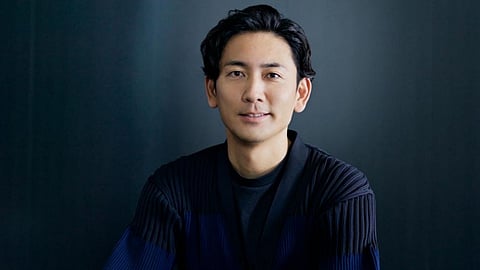
Shinsuke Sakimoto didn’t exhale. “What I felt first was not relief, but a sense of calm,” he says. “In that moment, what crossed my mind was a conviction that this watch must not come to rest here.”
For Sakimoto, founder and CEO of Valuence Holdings, the company behind ALLU, the purchase wasn’t just an acquisition. It was an arrival. “The 1987 Crash had, in some way, existed within me long before I acquired it. When the bid was finalised, it felt less like a purchase and more like it had finally arrived where it truly belonged.”
That sentence explains Sakimoto better than any balance sheet. He is a collector who doesn’t buy objects. He adopts stories.

Valuence began with a simple observation. “I was drawn to the reuse business after witnessing first-hand how many high-quality items were sitting unused and forgotten,” Sakimoto says. The company’s purpose follows: “Circular Design for the Earth and Us.”
For Sakimoto, it means circulation of emotions, provenance, and cultural value, and not just objects. “The world is transitioning from an era that valued material wealth for personal gain to one that seeks emotional richness through experiences and connections."
ALLU’s concept, “Objects into Stories,” is literal. When clients sell to ALLU, staff take time to listen to the stories and sentiments attached to each item before assessing its value through expert appraisal and authentication.
Pre-owned is no longer second-rate. Shinsuke feels pre-loved items will be a natural and mainstream part of luxury consumption. “Pre-owned items are no longer seen as a second-rate choice, but rather as a symbol of discernment and values.”
Sakimoto didn’t decide to become a collector. He realised he already was. “When I began to feel curiosity about the intentions of the artisans, the cultural context of the era, and even the traces left by previous owners behind each piece — that may have been the true beginning.”
The shift was philosophical. “It was a shift from simply owning an object to entering the story of the object.”
His first luxury purchase wasn’t a watch. It was an Armani suit, bought with his first salary after joining Gamba Osaka as a professional footballer. “At the time, it was a significant investment. I bought it as a reward for achieving a lifelong dream since childhood, and as a declaration of my commitment to live as a professional.” He no longer owns it. “The experience remains unforgettable. It marked the starting point of how I relate to objects and value.”
Today, the vision is clear. “The axis of my judgment is always story. A brand represents trust, and rarity is often the result of circumstance. Both are important, but neither alone explains why a particular piece must be chosen.”
That explains the Crash. Why buy a watch that refuses to tell time? “What attracted me most was precisely the fact that this is not a timepiece designed for rational timekeeping. It quietly yet powerfully challenges the conventional notion that luxury must pursue precision and perfection.”
The Crash isn’t alone in his vault. There’s the Hermès Sterling Silver Kelly. “I believe that pieces which transcend categories carry within them a kind of question posed by their creators. Objects that refuse to answer whether they are, for example, a bag or a sculpture, yet are brought to life through the highest level of craftsmanship, are what move me most."
So, what inspires Shinsuke to collect heritage pieces – is it rarity, story, or the freedom to own what only two other people can? Sakimoto’s answer: “I believe true luxury emerges at the intersection of all three. However, if I had to choose one, it would be story.”
Why? “Rarity is shaped by time, and even the idea that only two people can own it is merely a result. What truly matters is the context — what the object has been through, whose hands it has passed through, and where it is headed. The ability to find meaning in that narrative is what defines luxury in 2026.”
That definition changes collecting. “In the past, the excitement of acquisition was central. Today, I find myself thinking more about the responsibility of passing each piece on to its next owner. I believe the true meaning of a collection only becomes visible when one realises they are not its final destination.”
Sakimoto holds deep respect for India’s rich culture and heritage, and Valuence regards India as a market with significant potential, though it is not yet at the stage of sharing specific business plans. “Luxury items commissioned by Indian royalty carry a significance that goes beyond watches or jewellery. They serve as symbols of diplomacy and cultural translation.”
He cites the maharajas. “Pieces specially commissioned by maharajas from brands like Cartier and Patek Philippe embody a unique fusion of Eastern and Western aesthetics. As a collector, I hold deep respect for the richness of the narratives they carry.”
The Nizam’s Rolexes. The commissions that merged European houses with Indian courts. “I have a deep interest in such pieces."
That interest is commercial and personal. “India’s deep respect for craftsmanship and cultural heritage, combined with its rapidly expanding affluent population, aligns strongly with our purpose of Circular Design for the Earth and Us," concludes Sakimoto.
Disclaimer: The views and comments relating to the Cartier Crash acquisition and Mr. Sakimoto’s personal collection are made in his personal capacity and are independent from Valuence / ALLU corporate activities.