
Subscribe
Subscribe
- Motoring
- Style
- Home & Design
- Travel
- Food & Drink
- Specials
- News & Tech
- Videos
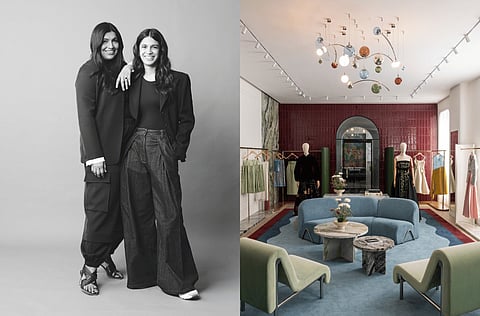
When Karishma Swali and her daughter, Avantika, launched their fashion label Moonray in 2021, their mission was to make craft a part of the everyday narrative. “Craft is often perceived as something decadent and opulent, but we wanted it to be age-agnostic and something younger generations could connect with,” says Swali. In a short span, Moonray built a following across generations with its zero-carbon innovations in sculptural silhouettes, proving style and sustainability can coexist.
But Swali’s vision didn’t end there. She wished to expand—into food, wellness, and the home. With four decades of experience as the founder and director at Chanakya International, the textile and embroidery house that collaborates with Dior and artists like Barthélémy Toguo, she realised that the “medium itself could be the message”. Swali and her daughter’s latest venture, Chorus, is an atelier where craft is the common thread, woven through clothing, home objects, and even food, with a café that ties it all together.
At its core, the brand is an ode to India’s artisans and women of Swali’s Chanakya School of Craft, which educates and empowers women with a curriculum of over 300 hand-embroidery techniques. “Hence, the name Chorus. It’s the harmony of many voices coming together, and it was important to reflect that.” The store in Kala Ghoda holds the stories of all the people who create its products.

As you step into heritage building with tall sunlit windows, the first thing you notice is a display of vibrant woven baskets. Look closer, and their intricate warp and weft begin to reveal stories of patience and precision. Swali purposefully positions them at the entrance to highlight a craft that often goes unnoticed. “Basketry is usually seen as something domestic, not as fine art, and it’s part of the curriculum at the Chanakya School of Craft,” she explains. “Within weaver families, women’s roles are often restricted to wrapping the shuttle, a task that requires immense precision before the men begin weaving. This collection, The Wrap Shuttle series, shines a light on their unseen contribution to the craft.”
Such little nods to Indian artistry are found across the space and form the Chorus Concept collection, which also features soft cashmere throws crafted from regenerated wool and mouth-blown glassware from the artisans of Firozabad.
Among the objets d’art sits the ready-to-wear collection, where the story continues through fabric. Tailored silhouettes are made from textiles created by artisans who carry 13th-generation knowledge: rain-fed kala cotton woven by the weavers of Kutch and checkered fabrics from Madras in butter yellows and peony pinks. “Our denim, made from organic cotton grown in Kutch, uses only a fraction of the water that traditional denim does,” notes Swali. Some pieces are hand-painted and layered with micro-beads that catch light, others are jewelled with 3D crystal brooches. Swali points to a brooch on a poplin cotton shirt from the Other Worlds collection, which reimagines florals in unexpected ways, and says, “This tiny piece has fringing, knotting, and three-dimensional origami flowers.”
The interiors at Chorus play foil to the concept of the space as well, where art and craft are integrated into the design. Designed by Swali herself, armed with Pantone sheets and resham references in hand, the space unfolds in natural stone, warm wood, and textured surfaces. On the second floor, a larger-than-life artwork pays homage to the forgotten art of rafugari, showcasing traditional stitches used to restore torn fabric. A sky-blue fluted marble table anchors the first level, featuring ceramic pieces and products from Chorus Wellness: botanical body oils made by nuns in Kerala using wild rose, pomegranate flower, and almond-milk soaps crafted from Moroccan red clay and activated charcoal.
The top level of Chorus is reserved for its most special offering—the Chorus Edition, a collection of made-to-measure pieces that are the result of thousands of hours of tailoring, draping, and embroidery by 13th-generation artisans. River pearls, metallic threads that catch and refract light, crystals, and fire-polished beads come together on garments. One piece depicts the Zodiac, hand-painted, micro-beaded, and finished with delicate appliqué, while another transforms repurposed plastic bottles into floral embellishments. One garment showcases handmade Italian reticella lace. “In India, lace-making only began when the Portuguese and French arrived in the 15th century. They taught the craft to the nuns in the south, and, even today, it remains one of the few places in the world where lace is still made entirely by hand,” Swali notes.
Forgotten crafts find expression even on the plate at the vegetarian (also vegan) Chorus Café, located on the same level. The Chorus Quilt, for instance, arrives like a patchwork cloth made of scraps, with house-made dips such as garlic hummus, smoked carrot, and yoghurt with chives, and finished with dehydrated onion-peel ash, so that nothing goes to waste. The Lace and Leaf salad is made of avocado and ribbons of snow peas and charred cabbage woven together and crowned with a rice crisp that resembles lace. The Fazzoletti looks like a pretty handkerchief draped over seasonal vegetables and burrata.
The café is framed by a monumental textile artwork created by the artisans of the atelier, its surface alive with embroidery techniques that range from tufting to zardozi. Look closely between bites, and you’ll begin to notice hands hidden within the composition—an ode to all the hands that bring Chorus to life.