
Subscribe
Subscribe
- Motoring
- Style
- Home & Design
- Travel
- Food & Drink
- Specials
- News & Tech
- Videos
There was a time when luxury did not announce itself. It waited. It existed quietly in intention, in the pause between desire and creation. It was commissioned, not selected. Owned— but more importantly, understood. Somewhere along the way, luxury learned to speak too loudly. Logos replaced language; recognition replaced reflection. And yet, like most things that matter, belief has a way of returning when noise exhausts itself.
India remembers this instinct. The maharaja never bought luxury to belong; he commissioned it to express who he already was. Architecture, jewellery, textiles, entire cities were shaped by conviction rather than consensus. Luxury was a conversation between land, material and imagination.
Umaid Bhawan Palace stands as evidence of this mindset. Its marble, quarried locally, carries natural tones that no imported stone could replicate. There is something deeply reassuring about that choice. It is a confidence that does not need validation. International designers brought form and proportion, but the soul of the building remains resolutely Indian. It reminds us that global does not mean detached; it simply means aware.
Jewellery followed the same rhythm. The great royal commissions were never about accumulation. They were about articulation. The Patiala necklace, with its Indian stones and regional aesthetics interpreted by a European maison, was not a surrender to branding. It was the opposite. The brand existed to serve belief. The object carried memory, not marketing.
That belief did not disappear. It went quiet for a while. Today, it is resurfacing across disciplines, often in unexpected ways. Consider the modern Indian wedding, once consumed by spectacle, now slowly returning to meaning. Curators such as Vandana Mohan, who is the founder and artistic director of The Wedding Design Company, understand that heritage properties are not stages but storytellers. When ceremony, architecture, and ritual are allowed to breathe together, celebration becomes cultural authorship rather than performance. Architecture, too, is learning to listen again. Spaces once frozen in nostalgia are being allowed to evolve. Through the work of architects such as Amrish Arora, old courtyards become places of dialogue, not relics. Heritage is no longer preserved out of fear but trusted to adapt. There is something radical about that faith.
Fashion, long caught between costume and commerce, has undergone its own reckoning. Indian craft was once displayed like an artefact—admired but distanced. Designers such as Anamika Khanna changed that grammar. By placing contemporary Indian aesthetics on global runways without explanation or apology, she transformed craft into assertion. Cinema, perhaps more than any other medium, holds a nation’s emotional memory. The films of Sanjay Leela Bhansali operate like elaborate dreams. They are not concerned with realism; they are concerned with truth. His visual worlds have taught global audiences how India imagines itself— not as it is photographed, but as it is felt. Richness here is emotional, not decorative. Art perhaps articulates this philosophy most clearly. Artists such as Jitish Kallat build bridges between Indian thought systems and global discourse without ornamentation. His work travels not because it adapts, but because it believes. Local ideas, when sharpened, do not need translation.
This return to belief coincides with a generational shift. Younger consumers are less impressed by legacy alone. They are more patient, more questioning, more rooted. They are willing to wait for customisation, to invest time in process, to trust experiences over emblems. A journey through leopard country or a thoughtfully designed flight to Doha holds more meaning than a familiar logo. Faith has replaced familiarity. Luxury brands feel this shift. Some resist it; others adapt. But the direction is clear. The future will not reward scale without sincerity. Value will be measured by how honestly personalisation and localisation are integrated. Trust is no longer assumed; it must be earned. From maharajas to modern custodians such as Thakur Man Singh Kanota, who reimagined legacy spaces as living cultural destinations, the pattern remains unchanged. Luxury survives when it is authored, not amplified. Belief rather than branding is not a rejection of luxury—it is its quiet homecoming.
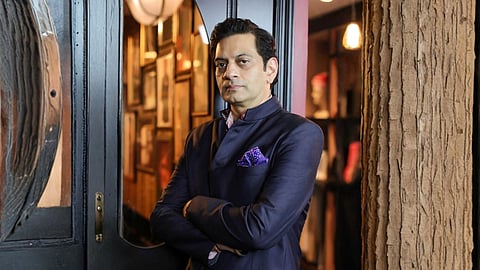
The writer is the founder and designer of the eponymous luxury menswear brand Raghavendra Rathore and is an RR Circle member.
