
Subscribe
Subscribe
- Motoring
- Style
- Home & Design
- Travel
- Food & Drink
- Specials
- News & Tech
- Videos
It’s not often that you hear competing brands use the exact same answer to a question. Yet, both Mercedes-Benz, which is the market leader in the luxury automobile space in India by volume, and BMW, which occupies the next spot, agree that the wonderful growth story in India’s luxury automobile space is being fuelled by a young generation intent on living the good life in a post-pandemic world. But let’s rewind for a bit of context.
In the quarter that ended on September 30, both the three-pointed star and the blue and white propeller have posted record sales numbers. While Merc topped the charts, having sold 5,119 units, BMW followed with 4,204, registering 36 per cent and 21 per cent year-on-year growth rates respectively. Part of this tremendous surge in sales this September was due to the government’s GST reforms, but that’s only a part of the whole story.

Truth is that this growth story has been in the scripting since the world slowly started to bounce back from the intensely depressing pandemic years. “COVID-19 pandemic also created a paradigm shift in consumer behavioural impact. Young, financially successful customers are now changing their question, asking, ‘We surely need to save, but why can’t we spend?’ from an earlier generation who used to ask, ‘We surely need to save, why do we have to spend?’,” explains Santosh Iyer, Managing Director and CEO of Mercedes-Benz India.
It feels strange that his exact sentiment is echoed from the BMW Group India HQ. “I think the biggest factor for us has been the fact that you only live once. I think post-COVID, a lot of consumers have started believing in this. I think, as you know, the Indian consumer was always about saving more, investing more, and somewhere, luxury cars were seen as symbols. But I think that the concept has changed now. People feel that you don't know what's going to happen, especially after COVID, so why not enjoy the luxuries of life while you can? I think that a big mindset change has happened amongst the consumers,” says Hardeep Singh Brar, President and CEO, BMW Group India.
This sentiment of live it up while you can, combined with a changing consumer landscape, is only the beginning of this growth story. “The increasing demand for luxury cars in India reflects a combination of economic, social and regulatory factors,” says Balbir Singh Dhillon, Head of Audi India. A significant chunk of this growth story is being driven by newcomers into the space – the first-time buyer.
“Close to half of our buyers are first-time luxury buyers,” says Iyer, adding, “We have seen more first-time buyers upgrading to a Mercedes-Benz in the last 3-4 years, driven by soaring aspirations, rising affluence buoyed by financial success, yet highly rational, mature, seeking the best resale value.” The need to spend on luxury is also reflective of a different mindset of a young generation that is slowly but surely pushing the older one into a tighter space. “Gen Z has now started participating in sales as well. Of course, millennials are still there, but Gen X is slowly moving out, and together, millennials and Gen Zs are more. Besides, their propensity to spend is much higher than that of Gen X,” says Brar. Partly it is the function of the times they live in. “A steadily growing economy and rising disposable incomes have created a segment of customers who value premium experiences,” says Dhillon.
But what is truly telling is what the new generation of consumers is willing to pay for, compared to those in the past. “If you look at it from a product perspective, a lot of connectivity has come into cars; you could not see so many screens before 2020, but now you have multiple screens in cars that are completely connected. It's like an extension of the owner’s mobile phone. People want to stay connected all the time,” says the BMW top boss.
Exterior styling and personalisation are the other two great pulls in this segment of vehicles, where nearly everyone wants some form of exclusivity and individuality in their purchase decisions. “Exterior styling remains a key deciding factor for young customers, as it’s a reflection of their personality. Similarly, hyper-personalisation is the new trend, especially for our top-end luxury portfolio, where customers want to customise their cars suited to their taste,” says Iyer. Small wonder then that nearly every manufacturer in this segment and above has bespoke programmes that allow the customer to create a version of the product that is a reflection of his or her identity and personality. “This shift is driven by a combination of global exposure, digital awareness and a stronger emphasis on sustainability and future-ready mobility. Our younger customers are confident in making bold choices,” says Dhillon.
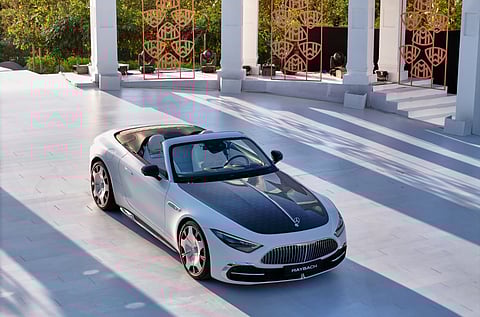
EVs, too, are driving this demand surge, but for entirely different reasons than what is driving BEV growth in lower price segments. “Luxury dwellers who have transitioned to BEVs are influenced more by the necessity to preserve resources, having a zero-tailpipe mode of transport- leaving a greener planet, rather than pure economic considerations. The trend to electrification is influenced by the latest technologies and hassle-free ownership,” says Iyer. It’s also how well the idea of a refined and silent EV powertrain integrates with the notion of luxury. The Mercedes-Maybach EQS, for example, is a great case to show how EV tech has been seamlessly introduced into the realm of luxury.
Agrees Brar, “On the emotional side, the sustainability that I'm contributing to the sustainability of the planet is also another reason why these people end up buying an electric vehicle.” BMW has sold more than 2,500 EVs from January to now. “Customers are now more willing to embrace innovative technologies and make conscious choices, seeing EVs not just as vehicles but as statements of progress and responsibility,” says Dhillon as well.
But how long can this euphoric wave last? At what point does the surf break? Not soon, if you ask the industry. “I think it will continue, and I feel the premium or luxury segment will do even better than the overall market. Even this year, I expect the overall market to grow by 4-5 per cent, but the premium/luxury segment should grow by almost 9-10 per cent, which is 4-5 per cent better,” says Brar. “We are witnessing increased luxury consumption driven by soaring aspirations and improved lifestyles among the affluent segments. Young successful professionals, entrepreneurs, women, and high-salaried individuals are now buying luxury cars, underlining a clear shift in preference for luxury consumption, driven by wealth creation and a steady growth in per capita income. Interestingly, this trend is not limited to large metropolises but permeates to emerging metros, which we see as future growth engines for luxury products and services,” says Iyer.
For now, may the good times keep rolling!