
Subscribe
Subscribe
- Motoring
- Style
- Home & Design
- Travel
- Food & Drink
- Specials
- News & Tech
- Videos
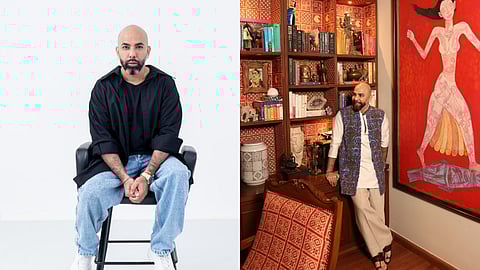
Mayyur Girotra's 'The Collectables' launch unfolded like any other collection until an unexpected hush fell over the room as Girotra, while addressing the media, was overcome with emotion. His voice trembled, then broke, carrying with it the weight of his journey to build the collection.
He shared stories from his travels across India, of meeting karigars whose skilled hands create the very pieces that fill our wardrobes, yet whose own working conditions remain far from glamorous.
Moved by what he witnessed, Girotra made a conscious decision to ensure these artisans receive not just fair pay, but the dignity and quality of life they deserve. For him, their contribution is as vital as his own, and they deserve to be celebrated just as much.
While the collection shifts the spotlight to the karigars, it also carries a clear purpose to keep India’s craft traditions alive. At a time when fewer young artisans are taking up these skills, Girotra's effort feels necessary.
By ensuring fair pay and dignity, Mayyur Girotra's vision goes beyond design to support the future of these crafts. The result is a series of collectables that transcend seasons, modern heirlooms, created for generations to inherit.
In an exclusive chat with RR, Girotra opens up about his latest collection, the power of Indian craftsmanship, and why the spotlight must extend beyond the designer to those who bring each creation to life.
Mayyur Girotra: The Collectables came from a very emotional space. Over the years of collecting textiles, fabrics that I loved, lately working with artisans across India, I realised that many extraordinary crafts, fragments of textiles, embroideries, and heritage techniques are slowly disappearing or being overlooked.
I wanted to create something that felt almost like preserving pieces of historical objects that people could own, cherish, and pass on. The Collectables are not just fashion pieces, they are artefacts of craftsmanship. Each piece carries a narrative of where it came from, who made it, and the journey it has taken before becoming part of the collection. Whether it is a new textile or old, my aim is for it to last for generations.

MG: Honestly, subconsciously, I have been collecting since forever without knowing the end goal to it. But when the right time kicked in, this collection took many months to shape, and fresh sourcing started as well, and conversations with artisans. Some elements of it actually come from years of collecting and documenting crafts during my travels.
The most challenging part was bringing together so many different craft traditions while still keeping the pieces cohesive and contemporary. When you work with handmade processes, nothing is predictable - each piece behaves differently. But that unpredictability is also what makes it beautiful.
MG: I hope people understand the value of patience, craftsmanship, and storytelling behind each piece. These are not just garments or objects; they are cultural narratives stitched together.
The collection is for people who appreciate heritage, who enjoy owning something rare and meaningful. It’s for collectors - people who see design as art and who value the journey behind the piece as much as the final form.
MG: I think people around the world are slowly moving away from mass production and beginning to value authenticity again. Indian craftsmanship is incredibly rich, layered, and diverse, and once people start understanding the depth of these traditions, they naturally develop respect for them.
For me, it’s a responsibility to not just use these crafts aesthetically but to give them context, credit, and continuity. That means working closely with artisans, documenting their techniques and presenting them in ways that feel relevant today while still honouring their origins.
MG: Luxury to me is time, authenticity, and emotion. It’s not just about something expensive, it’s about something that carries a story and a soul. True luxury is when a piece is made slowly, thoughtfully, and by skilled hands that have inherited knowledge over generations. It’s the feeling that what you are holding is talking to you and makes you feel deeply personal about it.
MG: For me, the journey is always evolving. I want to continue exploring India’s craft heritage and finding new ways to reinterpret it for the present. There are still so many stories, techniques, and regions that deserve attention.
The next chapter is about going deeper - working with artisans in Kolkata on something iconic I cannot disclose as of now.